
“Anthropology and PSIR represent the two biggest giants among UPSC optionals today. The difference lies in current affairs: PSIR demands daily international relations tracking until exam morning, while Anthropology is static, self-contained, and permanent once mastered.”
UPSC CSE Optional Trend Analysis
Among top rankers in the UPSC Civil Services Examination over the last five years, two optionals dominate the leaderboard: Political Science and International Relations (PSIR) and Anthropology. Both subjects regularly produce candidates in the top 10 and boast massive enrollment numbers.
However, choosing between them is often a source of intense dilemma for aspirants. Should you select PSIR for its massive overlap with GS Paper 2 and the Essay paper, or should you choose Anthropology for its compact, static syllabus and high scoring predictability? In this detailed, realistic comparison, we evaluate both subjects across workload, current affairs dependency, answer-writing requirements, and scoring ceilings for UPSC 2026–2027.
Workload and Syllabus Volume Compared
The total time required to master each optional represents a major point of divergence:
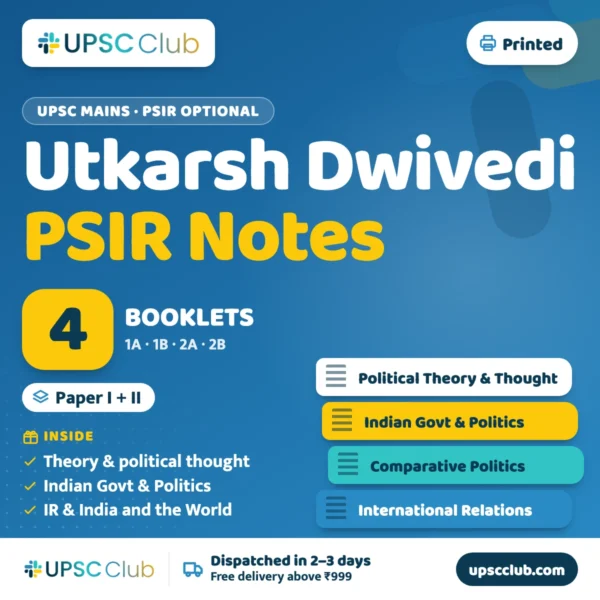
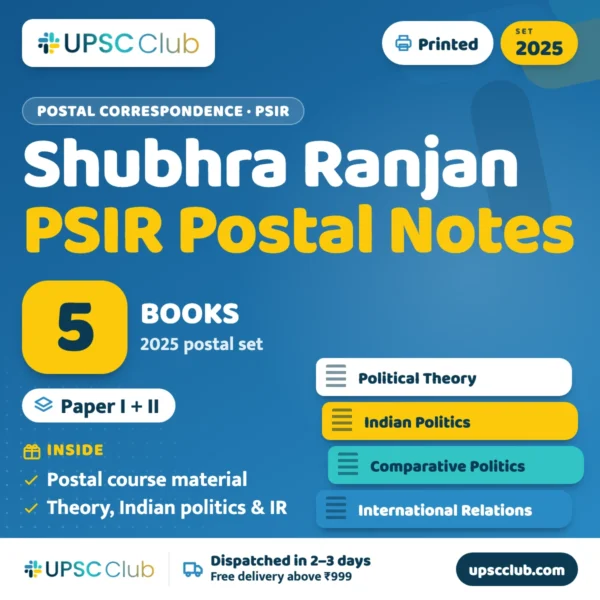
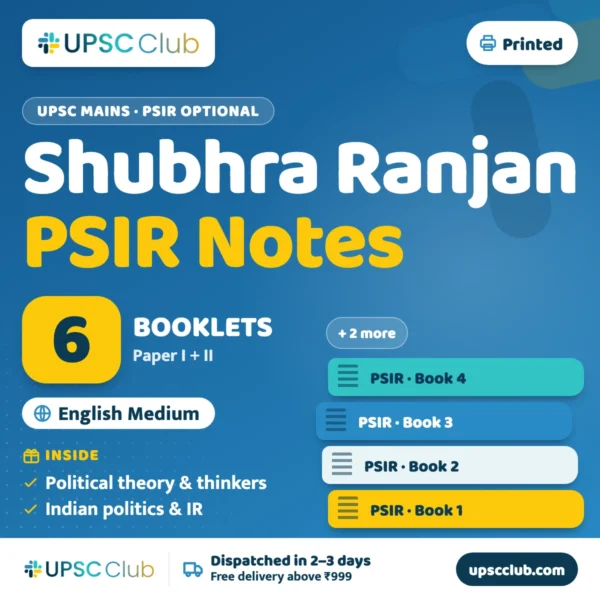
- PSIR Syllabus: PSIR comprises four massive sub-disciplines: Western Political Thought (Plato to Gramsci), Indian Political Thought, Political Theory, Indian Government & Politics (Constitutional development, party systems), and Comparative & International Politics (Global diplomacy, bilaterals, institutions). Covering all four sections thoroughly takes roughly 6 to 7 months of dedicated study.
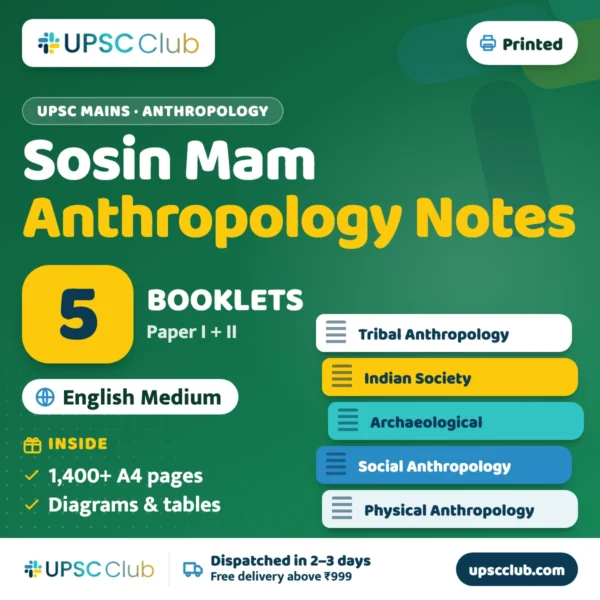
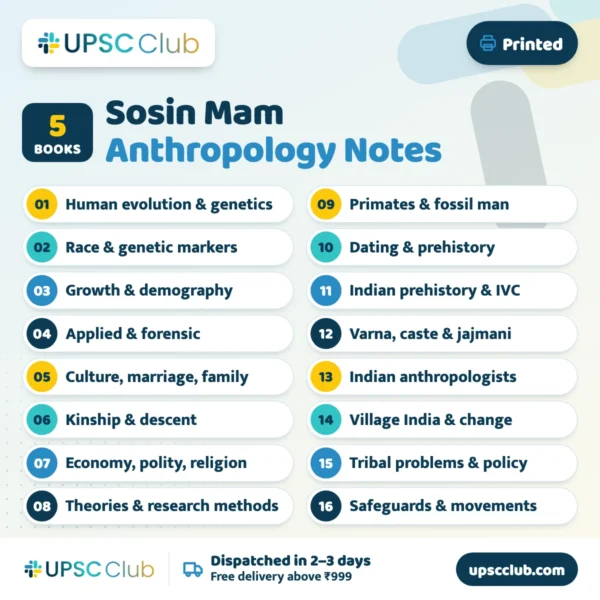
- Anthropology Syllabus: Substantially more compact. It comprises Physical Anthropology, Human Genetics, Prehistoric Archaeology, Socio-Cultural Institutions, and Tribal India. Because topics are neatly modular and static, an aspirant using consolidated study material like LotusArise IAS Master Notes can complete the entire curriculum in 3.5 to 4 months.
The Current Affairs Trap in PSIR vs. Static Stability in Anthropology
The single most underestimated challenge in PSIR is Paper 2 Section B (India and the World). Foreign policy evolves in real time. Bilateral summits, regional conflicts (West Asia, Indo-Pacific), trade treaties, and geopolitical alignments change continuously. Candidates must spend 1 to 2 hours every day clipping newspaper editorials, tracking think-tank analyses (ORF, IDSA), and updating their notes right until the week of Mains.
In stark contrast, Anthropology is almost 95% static. Neanderthal morphology, Mendelian genetics, kinship alliance theories, and archaeological tool sequences do not change. Once you have built your base notes, your preparation is locked in. The only dynamic element is Paper 2 tribal policy updates (such as the Xaxa Committee and FRA cases), which can be mastered through pre-curated case study banks without daily news anxiety.
Comparative Matrix: Anthropology vs. PSIR Optional
The table below summarizes the key trade-offs between both optionals:
| Evaluation Feature | Anthropology Optional | PSIR Optional |
|---|---|---|
| Syllabus Size | Compact (Can be completed in ~100–120 days) | Vast (Requires ~160–180 days) |
| Current Affairs Dependency | Minimal (<5% dynamic content in Paper 2) | Extremely High (Paper 2B requires daily IR tracking) |
| Paper 1 Scoring Ceiling | Very High (160–170 marks with scientific diagrams) | Moderate to High (145–155 marks) |
| General Studies Overlap | Moderate (GS 1 Society & Tribals) | Massive (Covers almost 70% of GS 2 & Essay) |
| Answer Writing Style | Point-based, diagrammatic, and formulaic | Essay-based, scholarly debates & discursive analysis |
| Pre-Mains 5-Day Revision | Seamless (Modular units with revision grids) | Exhaustive (Vast theoretical and geopolitical dossiers) |
Scoring Ceilings and Topper Trends
Both subjects have produced extraordinary toppers (such as Tina Dabi in PSIR and Akshat Jain, Apala Mishra, and Laghima Tiwari in Anthropology). However, Anthropology consistently demonstrates a higher theoretical marks ceiling in Paper 1.
Because Physical Anthropology questions behave like biology, candidates who provide accurate diagrams (such as primate skull profiles, bipedal pelvis flaring, and genetic pedigrees) earn near-perfect marks. In PSIR, theoretical debates between Realism, Liberalism, and Constructivism are evaluated subjectively, making scores above 155 in Paper 1 significantly harder to achieve.
Final Recommendation
Choose PSIR if you have an organic passion for international relations, enjoy daily geopolitical news tracking, and want maximum coverage of GS Paper 2 and Essay.
Choose Anthropology if you want a compact, static syllabus that you can master in 4 months, prefer drawing diagrams over writing lengthy philosophical prose, and want a predictable shot at 300+ marks without ongoing current affairs stress. With structured resources like LotusArise IAS Anthropology Master Notes, self-study preparation is seamless and highly scoring.
Explore complete curriculum modules on the official LotusArise Anthropology Store or review our comparison of the Best Notes for Anthropology Optional.

Join Our WhatsApp Channel
Get instant updates – Free and Premium Study Materials.
Join Our Telegram Channel
Exclusive PDFs, MCQs, Current Affairs and Study Materials.