



LotusArise Anthropology Optional Notes (Printed) Mains 2027 – Paper I & II, 4 Volumes
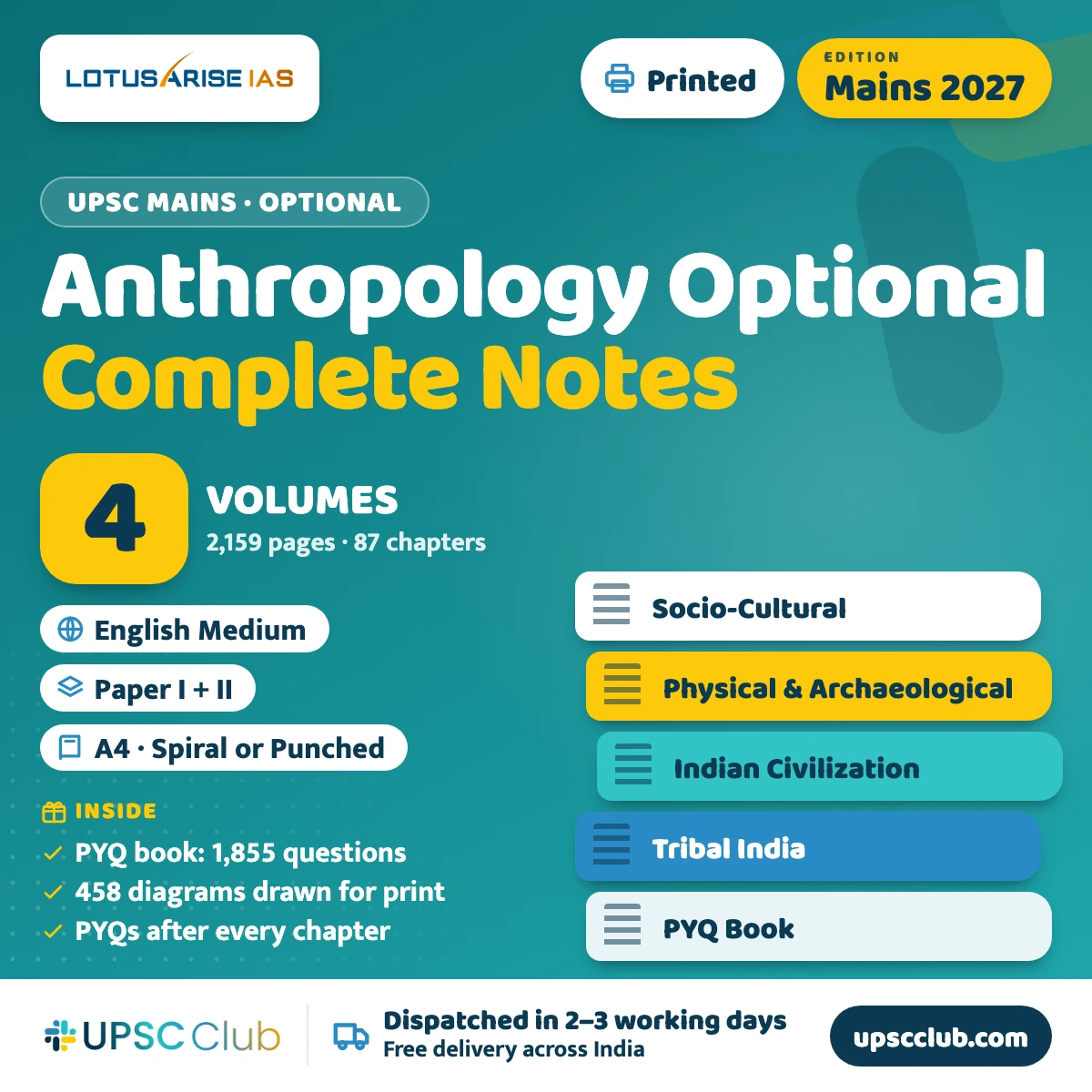
- 4 booklets
- Paper I + II
- Mains
- English medium
The printed edition of LotusArise IAS’s Anthropology Optional notes, covering the full Paper I and Paper II syllabus.
- Four volumes covering Paper I and Paper II
- Paper I: socio-cultural and physical anthropology
- Paper II: Indian and tribal anthropology
- Written in one voice and in syllabus order
- Connects theory, ethnography and Indian examples
- Dispatched in 24–48 hrsPacked and handed to the courier (not on Sundays or holidays)
- Arrives in about 2–8 working daysMost of India, with tracking by SMS and email
- Free delivery on this itemFree delivery above ₹999Orders of ₹999 or more ship free₹70 courier charge below that
Secure payment by UPI, cards, net banking or wallets
Questions about these notes?Chat on WhatsApp · +91 98383 85670- Printed booklets
- Courier across India
- Secure Payments
Everything in this set
The key details, one card at a time
How ordering works
- 1Place your orderPay securely by UPI, card, net banking or wallet.
- 2Packed and dispatchedYour order is packed and handed to the courier in 24–48 hours (not on Sundays or holidays).
- 3Shipped with trackingYou get the tracking link by SMS and email.
- 4Delivered to your doorUsually in 2–8 working days after dispatch, depending on your PIN code.
Specifications
| Format | Printed copy |
|---|---|
| Booklets | 4 |
| Medium | English medium |
| Exam | Mains |
| Papers | Paper I + II |
| Author / teacher | LotusArise IAS |
More about this product
About the LotusArise anthropology notes
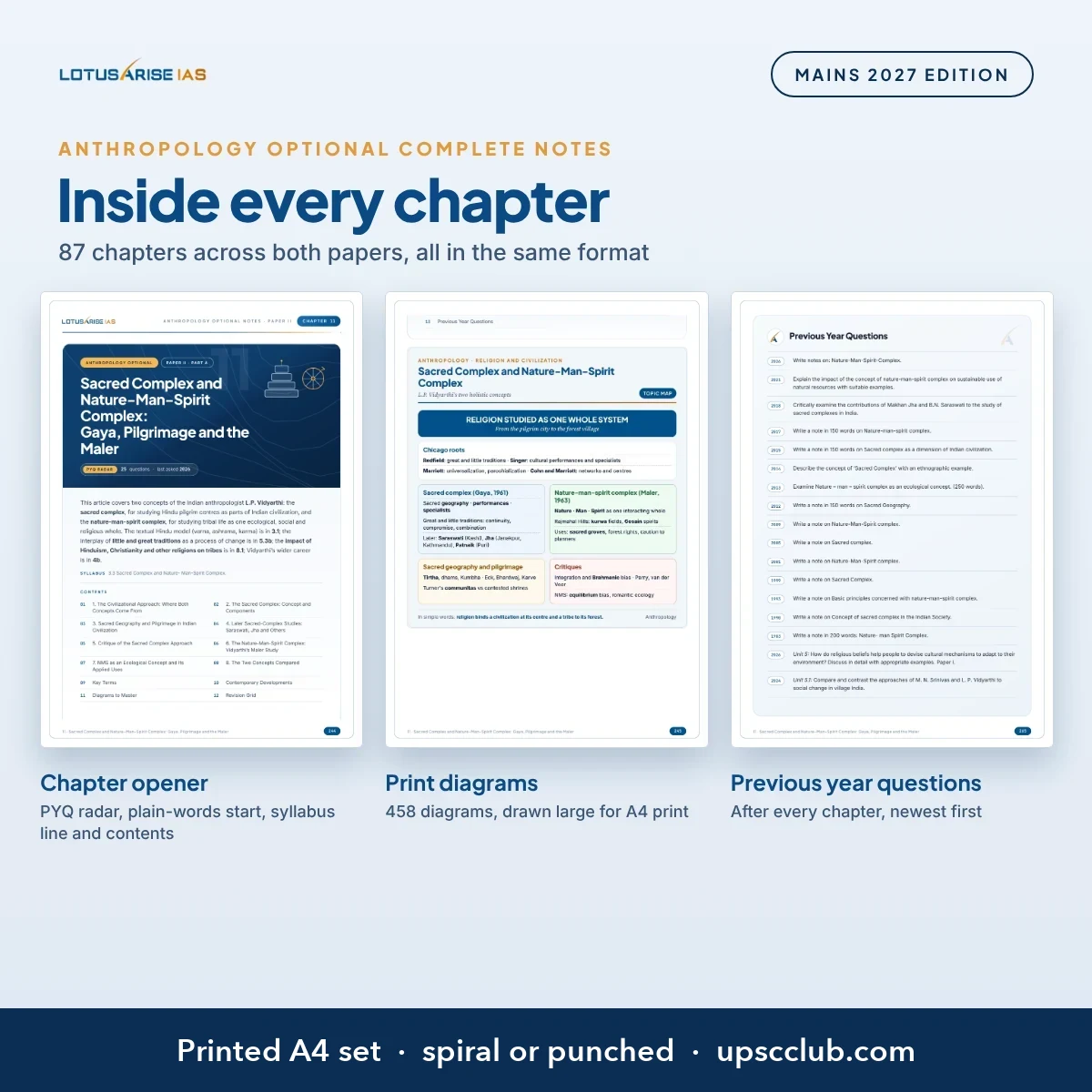
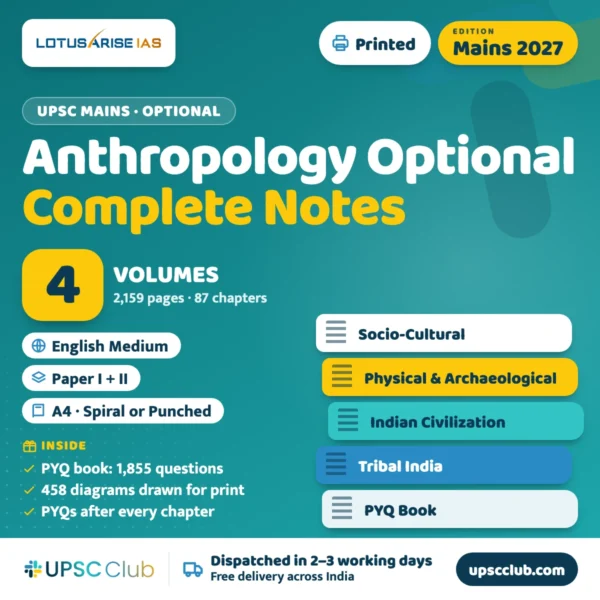
The LotusArise anthropology notes cover the whole UPSC anthropology optional syllabus, Paper I and Paper II, in one voice and in syllabus order. LotusArise IAS wrote them for Mains 2027 so that a beginner can follow every topic and still reach the depth a Mains answer needs: the theory, its critique and the ethnographic example.
This is the printed edition. UPSC Club prints and ships it as the printing partner of LotusArise Store, from the same files LotusArise IAS sells as PDFs on LotusArise Store. You get the four volumes and the anthropology PYQ book as A4 printed books, ready to read, mark up and revise.
What's inside
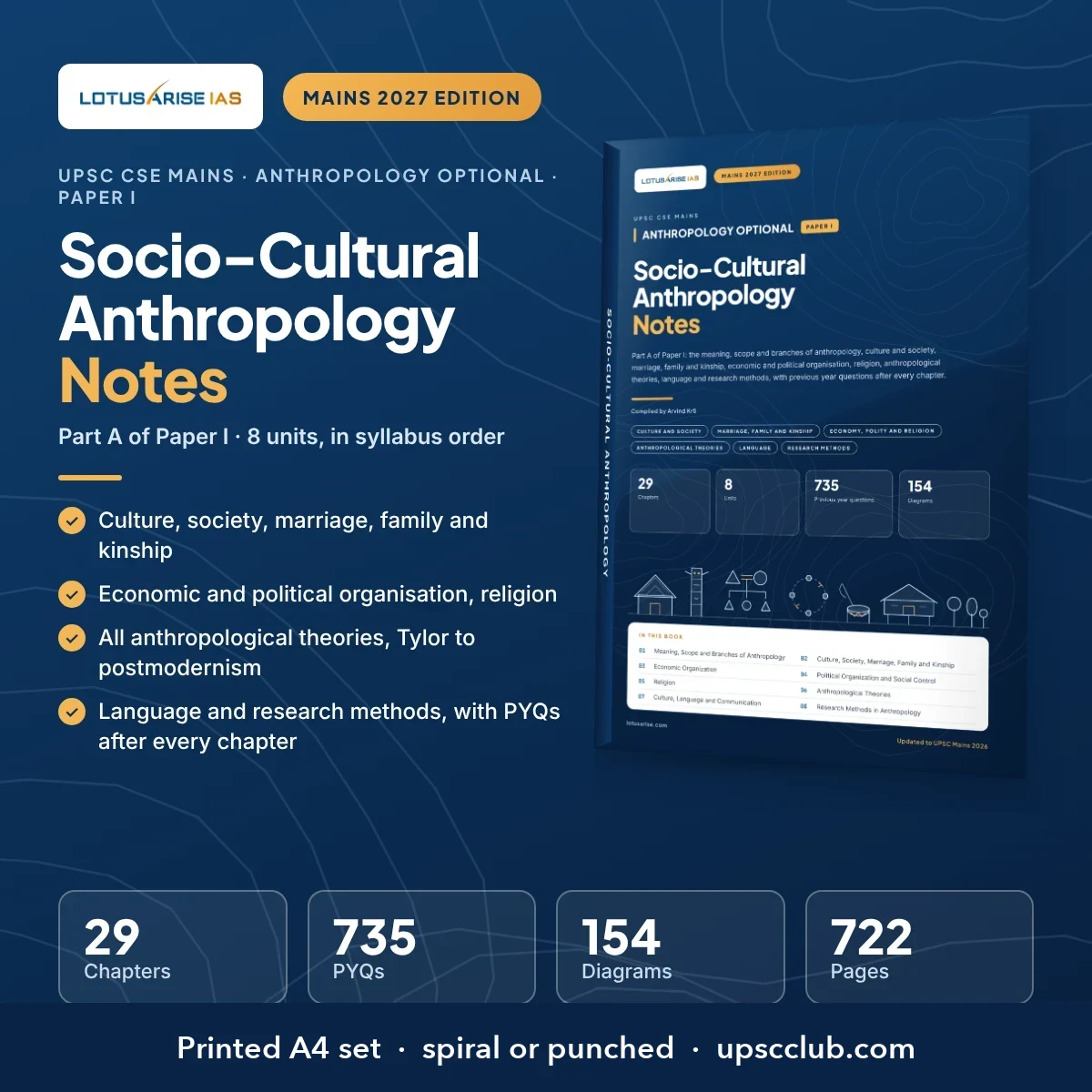
Volume 1 · Paper I, Part A: Socio-Cultural Anthropology (722 pages, 29 chapters)
Meaning, scope and branches of anthropology; culture and society; marriage, family and kinship, from incest taboo to descent and alliance; economic and political organisation, from the formalist–substantivist debate to the Kula ring; religion, magic and totemism; every major theory from classical evolutionism and functionalism to culture and personality, neo-evolutionism and postmodernism; language and research methods.
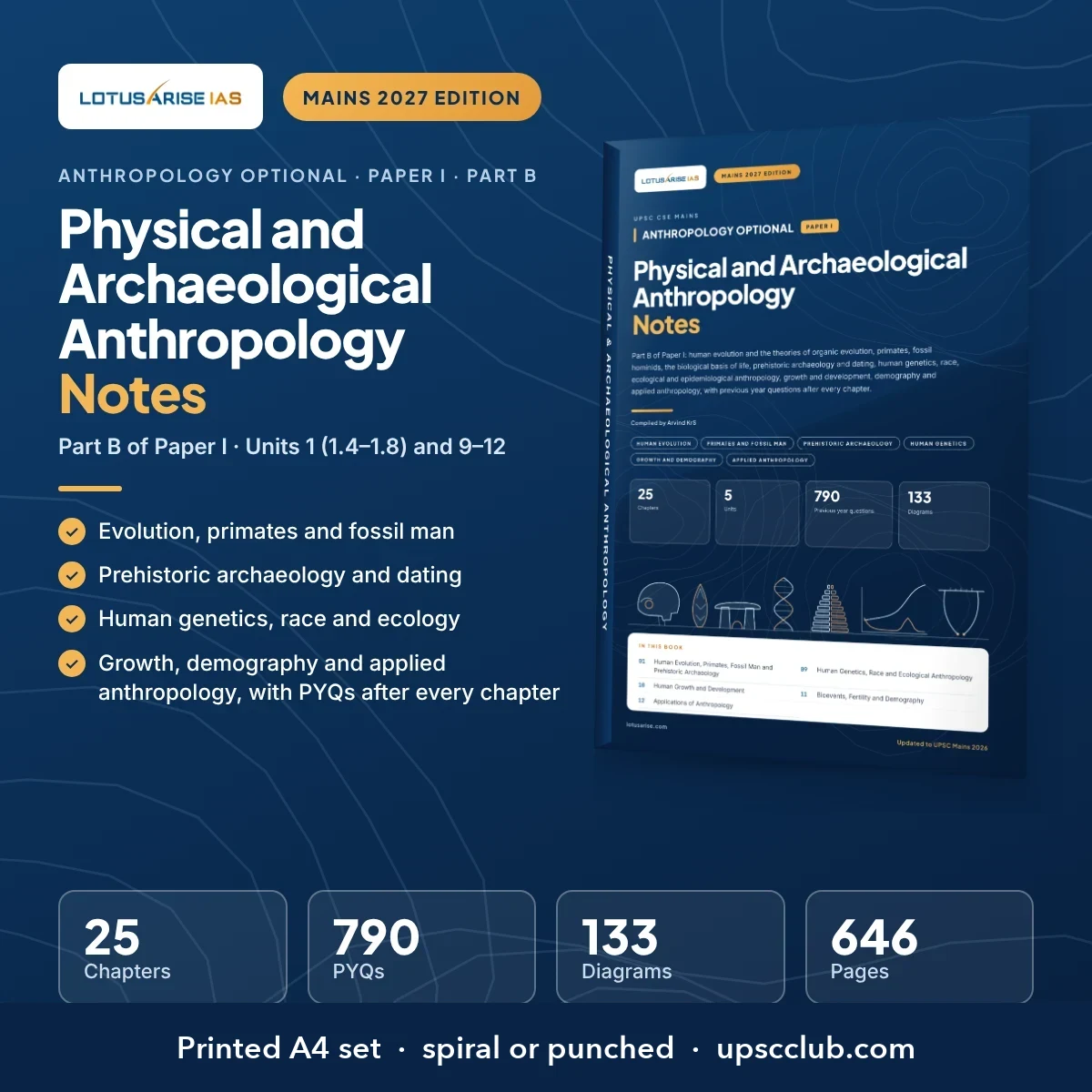
Volume 2 · Paper I, Part B: Physical and Archaeological Anthropology (646 pages, 25 chapters)
Theories of organic evolution; primates, fossil primates and the changes of erect posture; Australopithecines, Homo erectus, Neanderthal and Homo sapiens; dating methods and the Palaeolithic to the Iron Age; human genetics, race and genetic markers; ecological and epidemiological anthropology, growth and ageing, demography and applied anthropology.
Volume 3 · Paper II, Part A: Indian Civilization and Society (432 pages, 18 chapters)
Prehistoric India and the Indus civilization; the Siwaliks, Ramapithecus and Narmada Man; ethnic and linguistic elements of the Indian population; varnashrama, caste, dominant caste, jajmani and the tribe–caste continuum; Indian anthropologists, village studies, Sanskritization, and little and great traditions.
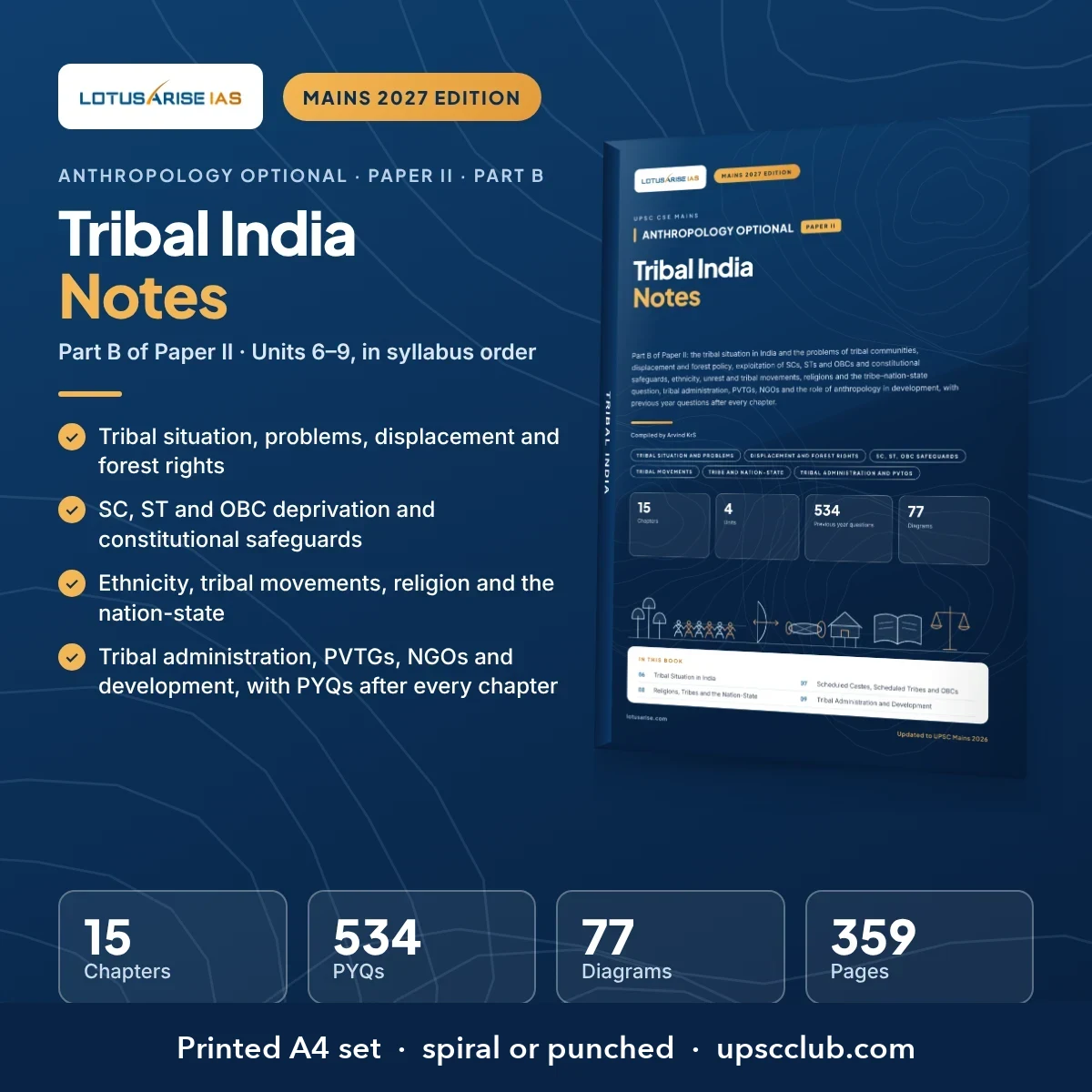
Volume 4 · Paper II, Part B: Tribal India (359 pages, 15 chapters)
The tribal situation and the problems of tribal communities; development projects, displacement, forest policy and the Forest Rights Act; constitutional safeguards for SCs, STs and OBCs; tribal movements from the Santal Hul to Jharkhand; tribal administration, PVTGs and the role of anthropology in development.
Anthropology PYQ book (206 pages)
1,855 previous year questions from 1981 to 2026, sorted topic-wise and newest first; all 26 full papers from 2014 to 2026; and ten-year pattern charts that show which units UPSC asks most.
Syllabus covered
| UPSC syllabus | Printed book |
|---|---|
| Paper I: socio-cultural anthropology, anthropological theories, language and research methods | Volume 1 (Part A) |
| Paper I: human evolution, primates, prehistoric archaeology, human genetics, applied physical anthropology | Volume 2 (Part B) |
| Paper II: Indian culture and civilization, demographic profile, the Indian social system | Volume 3 (Part A) |
| Paper II: the tribal situation, tribal problems, development and administration | Volume 4 (Part B) |
| Both papers: previous year questions, 1981–2026 | PYQ book |
How to use these notes
- Start with Volume 1. The theory and kinship chapters are the base for most Paper II answers on caste, village and tribe.
- Pair every chapter with its PYQs. The questions printed after each chapter show how UPSC asks that topic; write two before you move on.
- Practise the diagrams. Redraw the evolution, primate and genetics diagrams from Volume 2 until each takes under a minute.
- Keep Paper II current. Write new tribal schemes, court judgments and PVTG data into the margins of Volume 4; spiral-bound books lie flat while you write, and punched sheets can be filed volume by volume.
Format, medium and delivery
- Format: printed hard copy (no PDF), A4, double-sided
- Binding, your choice: Spiral Bound, 7 books of up to about 500 pages each that open flat, or Punched Only, the same pages hole-punched without a spiral, to keep in your own file or ring binder
- Pages: 2,365 printed pages: 2,159 pages of notes and the 206-page PYQ book
- Medium: English
- Edition: Mains 2027
- Delivery: dispatched in 2–3 working days by courier and delivered in 3–7 days across India; free delivery on orders of ₹999 or more
See the pages before you order. LotusArise Store has a free sample PDF of each book: Paper I, Part A · Paper I, Part B · Paper II, Part A · Paper II, Part B · PYQ book.
Frequently asked questions
Is this the same as the LotusArise anthropology notes PDF?
Yes. The printed set is made from the same Mains 2027 files that LotusArise Store sells as PDFs: all four volumes and the PYQ book. Only the format is different.
Is it a PDF or a printed copy?
A printed copy only. No PDF download comes with this order. If you want the PDF edition, buy it directly from LotusArise Store.
What is the difference between Spiral Bound and Punched Only?
Both have the same printed pages. Spiral Bound comes as 7 spiral-bound books of up to about 500 pages each, which open flat on the desk. Punched Only comes hole-punched without a spiral, so you can keep the sheets in your own file or ring binder and take out one chapter at a time. Pick the binding before you add the set to the cart; Punched Only costs less.
Are these notes enough for anthropology optional?
They cover every topic of both papers, with previous year questions after each chapter, so you will not need a second set of notes. You still need regular answer writing and current examples for Paper II.
Can I prepare anthropology optional without coaching using these notes?
Yes. They are written for self-study: each topic starts in plain words and builds up to the theory and its critique. Add a test series or peer review for answer writing.
Are the notes available in Hindi?
No. LotusArise IAS writes these notes in English only, so the printed set is English medium.
How long does delivery take?
The set is dispatched in 2–3 working days. Courier delivery then takes 3–7 days, depending on your city.
Related
Browse all UPSC optional notes, or compare with the Sosin Mam anthropology printed notes and the BrainTree anthropology notes.
Disclaimer & copyright notice
This material is educational content that is already circulated online. UPSC Club does not claim authorship or ownership of the original content; all rights belong to the respective authors, teachers and institutes. UPSC Club is not affiliated with or endorsed by any teacher or institute named on this page.
We have compiled and organised the material in one place for the convenience of UPSC aspirants. The amount charged covers hosting, printing and handling.
If you own the rights to any material listed here and would like it removed, please contact us and we will take it down promptly.
You must be logged in to post a review.
Related products
-
 Optional · Printed
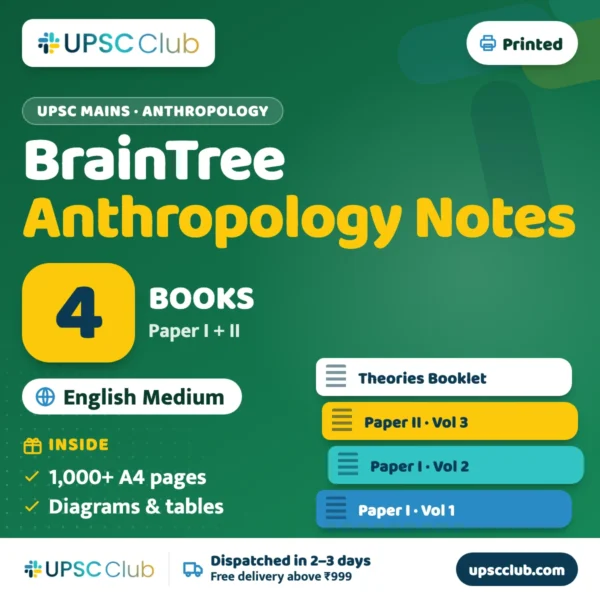
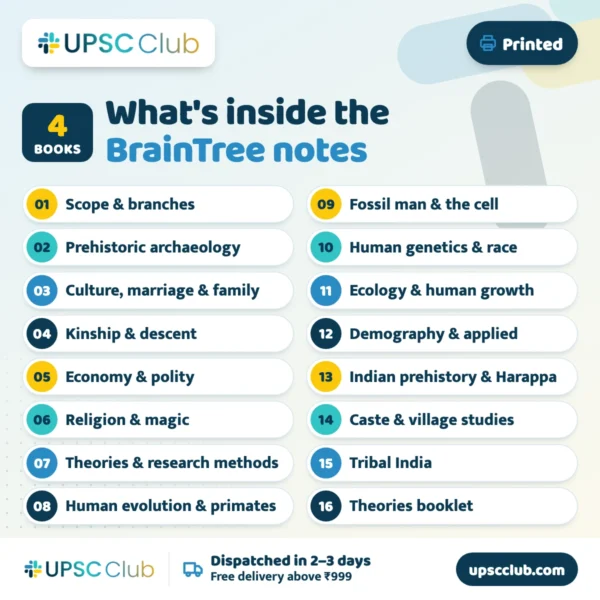
BrainTree Anthropology Optional Printed Notes by G.S. Karthik – 4 Books, Paper I & II
20+ bought ₹1,299 -
 Optional · Printed
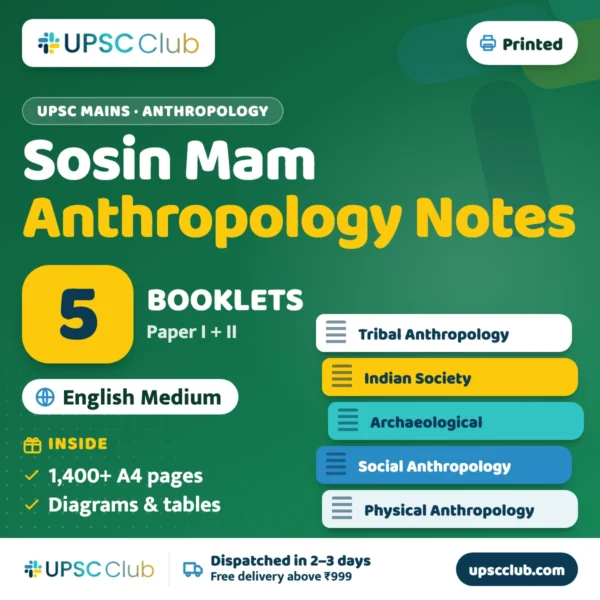
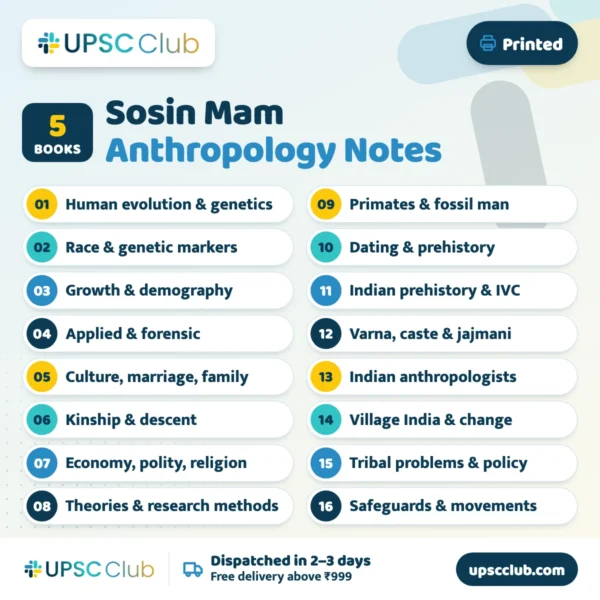
Sosin Mam Anthropology Optional Printed Notes – 5 Books for Paper I & II (Sosin Classes)
₹1,249 -
Reviews
There are no reviews yet.