
PSIR Optional Strategy, Notes and my Answer Copies
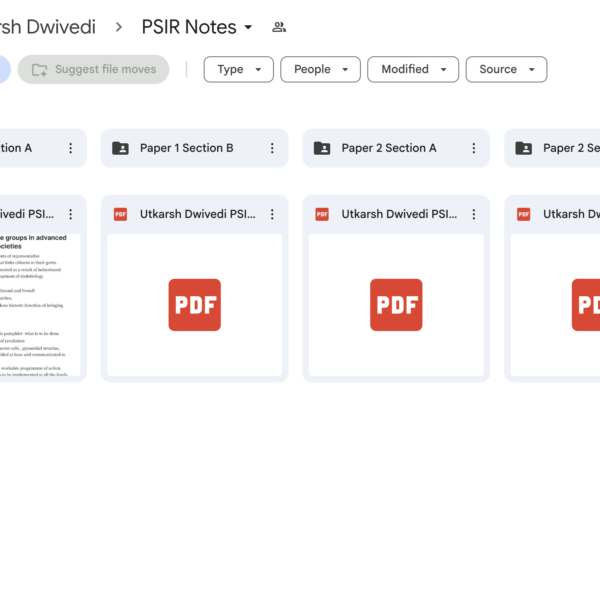
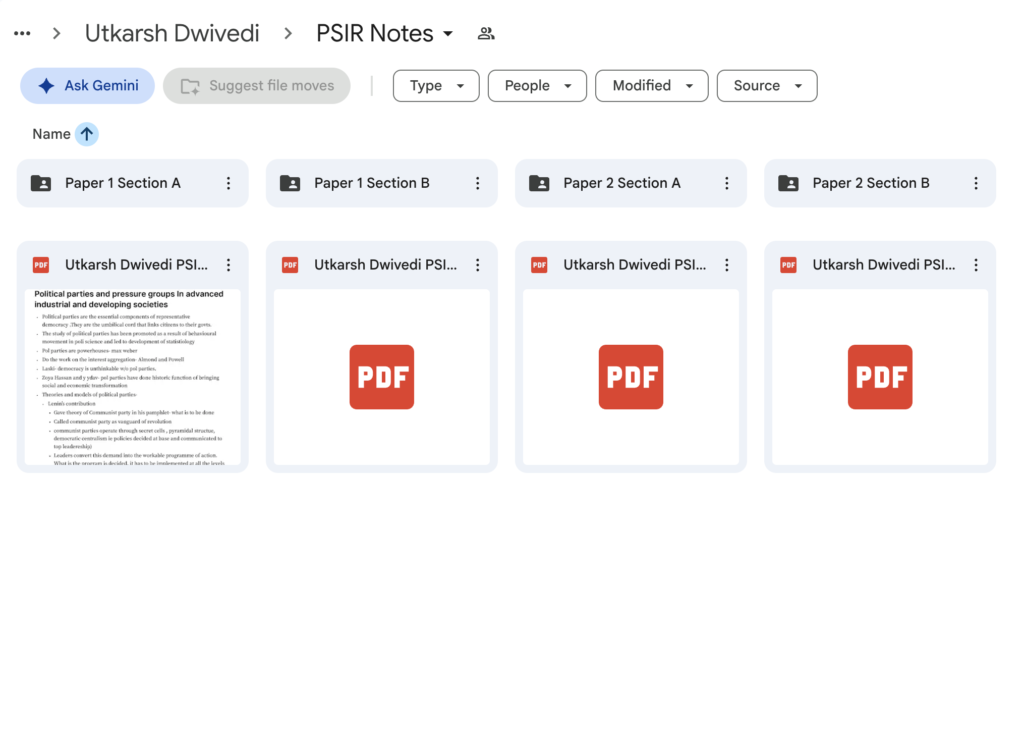
Utkarsh Dwivedi PSIR Optional Notes PDF for UPSC
Prepare for UPSC Political Science & International Relations (PSIR) Optional with the Utkarsh Dwivedi PSIR Optional Notes PDF.
These notes cover important concepts, thinkers, theories, ideologies, Indian politics, comparative politics, international relations and other topics relevant to the UPSC PSIR Optional syllabus.
Highlights
- 📘 Utkarsh Dwivedi PSIR Optional Notes
- 📚 Useful for PSIR Paper 1 & Paper 2
- 🎯 UPSC CSE Mains Optional preparation
- 📝 Structured and revision-friendly notes
- 📄 PDF format
- ⚡ Instant digital access
Note: These notes are being provided for educational and community purposes. The original material is freely available in the public domain/online. UPSC Club has only compiled and organized the available material in one place for the convenience of the UPSC aspirant community.
If there is one factor that has helped me achieve a single digit rank in CSE, it is my optional. I have scored 168 in paper 1 and 146 in paper 2, making it 314 in total. I have still not come across somebody with a score more than this and hence a comfortable claim can be made that this is one of the highest score this year. In this blog, I would mention what helped me achieve this score.
- I DID NOT refer to any other source than Shubhra Ma’am’s notes. There are two reasons to it.
- Firstly, since I had reached the interview stage in all my three attempts, I never had the luxury of time to refer to any book.
- Secondly, I believe Ma’am’s notes are more than enough to form the core aspect of the subject’s preparation.
- I did value addition from multiple sources so as to get an edge in my answers:
- I referred to copies of toppers of the respective tests that I attempted during my mains preparation. It helped in three ways:
- To understand why people are getting the marks they are getting
- To better understand a topic
- To get diversified quotes, book references and other keywords related to any scholar
- Read the solutions of the test series extensively
- joining multiple test series even though I couln’t solve them. I had joined VisionIAS and Shubhra Ranjan’s test series in my second attempt(CSE 2020) and found different perspectives on answers and scholars though both, which too widened my realm of understanding. This was a key reason that my score jumped from 235 (131+104) in my first attempt in CSE2019 to 280 ( 143+137) in my second attempt.
- I also made a list of books and authors , particularly for my IR paper and have used them extensively in my answers.
- I referred to copies of toppers of the respective tests that I attempted during my mains preparation. It helped in three ways:
- In CSE2019, Rank 22, Mandar Patki sir had suggested in an interview that he had arranged his optional notes in Intro – Body – Conclusion format. This is because in mains you don’t have much time to think over any question. Hence if you have the intro and conclusion already prepared in your mind, you can put all your focus on the body part and adjust it according to the demand of the question.
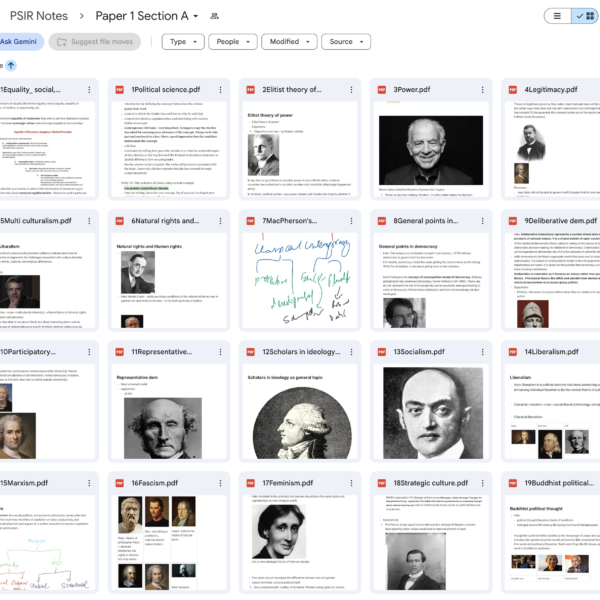
- Making use of photographic memory- Most of us tend to remember things by looking at them. it somehow gets etched in our brains. The inspiration for making PSIR notes with photos of scholars attached came from Tushar Gupta sir, IPS 2019 batch. His evernote is public and can be referred to for value addition. This too helped me a lot!
- Referring to topper copies: This is THE MOST important aspect of PSIR answer writing. I referred to three toppers , viz. Navneet Mann ma’am, Yashni Nagarajan ma’am and Trupti Dhodhmise ma’am. There was some element of commonality in all the three that I tried to imbibe in my PSIR answers:
- Writing end to end- Filling up all the space that’s available for the answer.
- Scholars aren’t everything – I noticed that a lot of answers of these toppers didn’t have a single scholar. What is important is that you must do justice with the question. You must explain in detail what is asked. This is the approach I followed this year and last year and ended up pretty good marks in PSIR. So this probably works!
- Using the language of political science – THE MOST important learning from their copies. Optional subject demands more nuanced understanding of the subject than GS papers. Hence when you write your answers, you must appear to the examiner as a serious student of the subject rather than a layman writing the paper.
- Keyterms : Any topic in PSIR, has certain keywords associated with it. When the examiner checks your copy, he does not has the luxury of time. So his eyes start looking for certain keyword associated with the topic that is asked. And if they aren’t there, then your train has derailed. You are not going to get the score you’re expecting. Suppose there’s a question on Marx and if words like Communist manifesto, dialectical materialism, etc aren’t there, then it’s not a good answer. If there’s a question on Hong Kong and you haven’t written “One country two systems”, then no matter what you write, it does not matter.
- Choosing what questions to attempt: Now this is a highly subjective area . But I’ll tell you what I did and if you’re still in the confused lot on which part to attempt, you could give this approach a try. I attempted more questions from Part A of paper 1 and Part B of paper 2. Since we have the compulsion to attempt atleast one question from each part, in paper 1 part B section, I attempted the questions that dealt with Institutional polity like office of governor, president, judiciary,etc and not the sociological polity part comprising topics like caste in indian politics, etc. This approach has worked for me well looking at my last two years’ scores.
- Order of attempting the paper: I used to first do all the 10M followed by 15M and the 20M. This was an approach I followed for last two years. But I reversed this, this time. Because in the end when you’re left with crunch time, your chances of damaging the last few questions become high. And if those questions are the 20M, then the impact of damage becomes quite high. So if you first give your best in the 20M and the 15M, then you already gain a lot of marks here. and the scope of damage in the 10M isn’t that high, so you’re safe there too. But there’s a con to it. The 20M and the 15M questions take up almost 2 hours and you are left with an hour for the 10M. So use this approach too at your own discretion.
- To handle the dynamic part of paper 2 PSIR dealing with IR-
- Visit following every month-
- IDSA website (also see their ask an expert)
- ISAS,NUS articles
- Carnegie India articles
- IR articles on ThePrint
- Project syndicate website
- MEA speeches and statements( Most important)
- ORF articles
- The distinguished lecture series on MEA is gold standard!
- Videos on YouTube-
- National security conversations
- Cut the clutter series (The best)
- Debates on Sansad TV
- Bharata First channel
Link to my approach towards writing PSIR answers and mistakes that I committed during test series: https://www.evernote.com/shard/s406/sh/7a3b9e51-6625-495d-849d-34249f78ace5/3905373b8eef4e74d4df0e72ced9b529
Having given a detailed approach towards the subject, I am attaching my notes for future reference. Use them at your discretion. They are only for your value addition. Do not make them your primary notes.
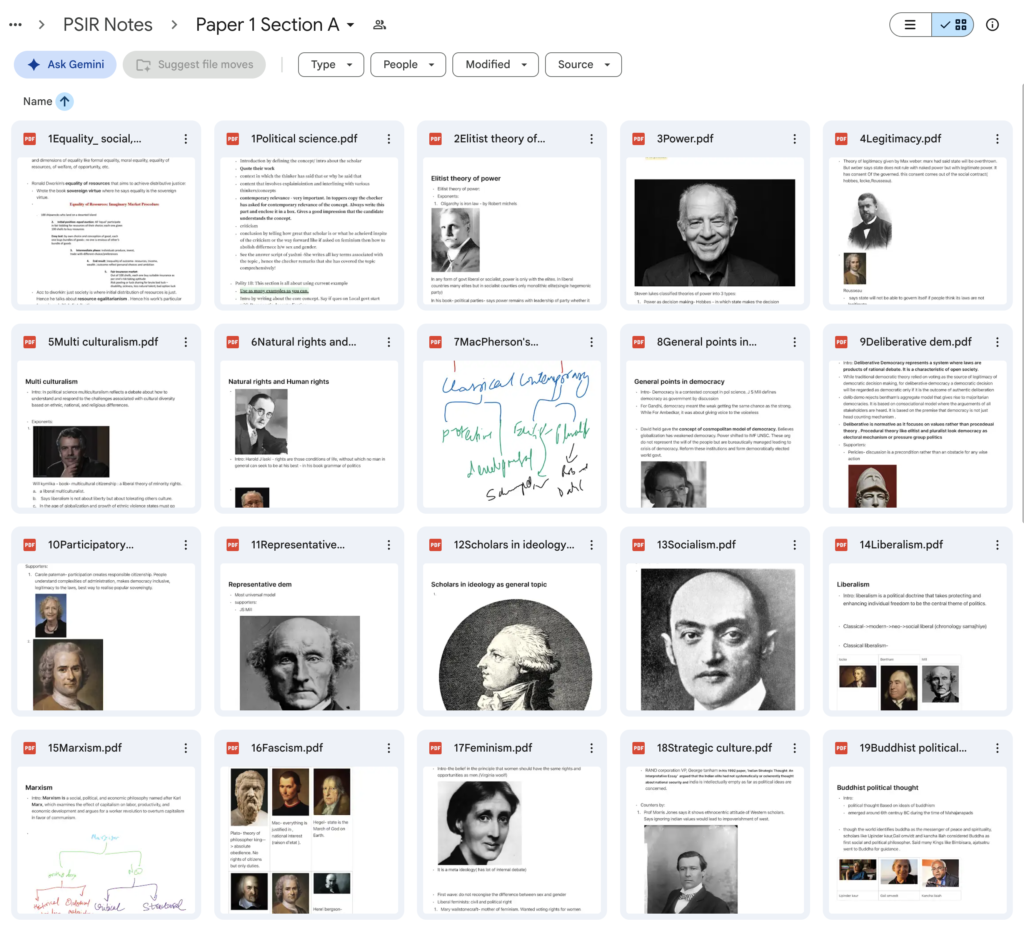
- Paper 1 part A:
- Equality : https://www.evernote.com/shard/s406/sh/014b7f51-dee1-4f0a-bde1-5048cb694088/bae2d4fe783de30a4176d49de0439edf
- Power:
- Elitist Theory of power : https://www.evernote.com/shard/s406/sh/faf20fdc-edc0-4cfa-9a46-ac602ff54f21/d039b7917548566e1ac5dd73a8062973
- power : https://www.evernote.com/shard/s406/sh/5536241f-f48a-4658-8086-159d33f6c5b9/f0357df4caf3bfbb95e73cb87e2a72f7
- Legitimacy: https://www.evernote.com/shard/s406/sh/395cb85a-5ba5-4a28-a234-f44dac0da87b/4fdba829628c0e0be4ea681639db2cbe
- Rights:
- Multiculturalism : https://www.evernote.com/shard/s406/sh/8fa4beb9-b189-4340-b05b-412bf96954b6/d05d26742ae9411331e94c3b6b064733
- Natural rights and human rights : https://www.evernote.com/shard/s406/sh/2d88b5fc-33b5-48ae-8247-ad3e82865390/7f0db3e7a154238e4862f015c8dd2dc1
- Democracy :
- McPherson’s analysis : https://www.evernote.com/shard/s406/sh/eecb540a-8f7b-4079-8a84-8af56b4f12f7/2a8ac845f55b930ab16daccc509eb00f
- general points in democracy : https://www.evernote.com/shard/s406/sh/122a055a-d8e2-453f-a6a1-ccdaf3c83c4f/7ce821dfae507b74944c12f30af1f7c7
- deliberative democracy : https://www.evernote.com/shard/s406/sh/055f6e6b-af04-4afb-9ff1-77fb111aba93/def9d4c9c7c480e9250611bfbebb0abb
- paricipatory/direct democracy :https://www.evernote.com/shard/s406/sh/03721778-dbec-4c02-aa74-b03951ed43f8/1c503958cb6cc4ec46ddb36129f9e193
- Representative democrac : https://www.evernote.com/shard/s406/sh/b6872086-3b73-43e6-83f3-b0cdd6de2eff/f2dbbef5cefce54be66bc367f3b30cfc
- Ideology:
- Scholars in ideology as general topic : https://www.evernote.com/shard/s406/sh/c6872fa3-774e-4b57-8186-a72f910720a6/70855c1f1704ace1a4c4b00e522c8fde
- Socialism : https://www.evernote.com/shard/s406/sh/24e6a025-22b3-435e-8fd1-44fbac5f2f7c/2c4c722fcfab4d85e75e494c5d5fa428
- Liberalism- https://www.evernote.com/shard/s406/sh/a923b3cf-18ce-46c4-99e4-29e9407bd567/93ad2671dec35a54c87e4208c6196172
- Marxism : https://www.evernote.com/shard/s406/sh/c055fc0a-ca9f-45cb-a829-c13f14594e50/01954713978e44a3c4add2ccf6b0f21f
- Fascism : https://www.evernote.com/shard/s406/sh/3d325321-85e9-4d14-a537-c6ce97fa7eba/98aee4206be08199b6c42f8caef0e2fb
- Feminism: https://www.evernote.com/shard/s406/sh/3beb2917-7613-4f60-950b-16ebb85319be/bdbffd3b1ed9f413f738dea38979a9e0
- Indian political thought :
- strategic culture : https://www.evernote.com/shard/s406/sh/3e3bb5fb-d4cd-4b95-a5ad-0edc8f7aeaf0/f5660eb800e33052054694d8b0042d28
- Buddhist political thought : https://www.evernote.com/shard/s406/sh/fcc5afc5-71bf-4959-9b2c-7b39019bd002/e288c9b0d27050434b9f2c01f69a5d5c
- Kautilya : https://www.evernote.com/shard/s406/sh/c710dff6-5a26-4352-ac46-b9ddea078411/ccb972a6e4a49a8d5ec9af91b253841f
- MN Roy :https://www.evernote.com/shard/s406/sh/28bab4a7-a289-4b30-bd3f-ccc8bd514a08/fbdba1ad7eaf95057f7aa7c3adf9465d
- Aurobindo Ghosh: https://www.evernote.com/shard/s406/sh/cfcea5e7-36f5-4a7c-86e0-7aa591374eac/d47d8e61471c705e5e5e4d572a005b94
- Gandhi :https://www.evernote.com/shard/s406/sh/fe9f6273-23ca-4926-b22e-5f29c93721b6/9e67ac952e30dbb4cdfec32c2e7abd0e
- Sir SAK : https://www.evernote.com/shard/s406/sh/0a1c3967-4039-43ed-a9cd-4c555e928313/1bc72f93c420795a39130a6d88a5a63e
- Ambedkar : https://www.evernote.com/shard/s406/sh/9abd063b-02dc-4497-a1a1-b4f27cf60c59/30727ac3fd448f31b43981165bccec1d
- Approaches to study political science : https://www.evernote.com/shard/s406/sh/d44bd765-7ed8-4682-9d6e-15992af3f3c2/12a810a9c174df1634de1d8f217e8048
- Rawls: https://www.evernote.com/shard/s406/sh/0e7f50f9-5fda-48aa-b28f-00e40af06b63/e19471873b60d9f8f97577d215ee7f7e
- Theories of state :
- General topic, liberal theory of state, state and globalisation:https://www.evernote.com/shard/s406/sh/eca47b75-9f5e-40d0-946b-cdef3a48e0dc/3aedf381986db3f813c30a2aff681630
- post colonial : https://www.evernote.com/shard/s406/sh/3033431e-818a-47bd-bf58-fdf5ce06eb25/8e6f5422592e07ea17477ca437518245
- Marxist theory :https://www.evernote.com/shard/s406/sh/000e5805-e886-4261-a3a1-24c0e17ec8c2/1ac703099243a66edb123c74ec783fc2
- Western political thought :
- Hobbes : https://www.evernote.com/shard/s406/sh/6a567c3a-757b-488c-9227-49666998242d/e4c799c782d2fbc36f7a55a28addc660
- Locke : https://www.evernote.com/shard/s406/sh/d2f20096-d767-453f-9347-04748b5913e4/d8d70117dfac5e7b7c0e1b2d1b05826a
- Aristotle : https://www.evernote.com/shard/s406/sh/ddf9702e-620e-48ac-ba7f-e658d1395db8/b6ea5a9ae19839b3627642d81c8c0057
- Plato, Socrates: https://www.evernote.com/shard/s406/sh/bc74bcf0-357a-4e3a-a6bc-0ddad9f052a4/08dfd74ec30a31642d46c9cb198c8d64
- Mill – https://www.evernote.com/shard/s406/sh/15a9661a-7824-4707-be09-214cc268ea2b/ed3aaf7c1314b88f321cb0eb477c620d
- Marx – https://www.evernote.com/shard/s406/sh/3ac94b90-aba9-40ed-a9ab-1a413f759d97/9971dd17d6ab42c80e125f5736dd504d
- Gramsci- https://www.evernote.com/shard/s406/sh/d5950144-0e10-4e58-b182-d10a38329e9b/5e121cf6f6fe24bd8636c8660dbdda1f
- Arendt – https://www.evernote.com/shard/s406/sh/bce1f497-a03d-41c3-8ee4-d430f13d4221/03c75c9ba4aa96827330392028af0bbf
- Machiavelli : https://www.evernote.com/shard/s406/sh/1423731a-2c92-46d8-b989-fbc6dbfda9b4/a81abf4c97fb9db4e998ad29eddb430b
- Paper 1 part B:
- caste in politics : https://www.evernote.com/shard/s406/sh/da96ad48-16da-4582-8251-b289eb97a9a7/54e4630ea3d531a46f0932b70cbc2fe0
- Statutory,regulatory , quasi judicial and constitutional bodies :https://www.evernote.com/shard/s406/sh/3030b1a0-738f-4e07-ad2e-98097cac4af4/e1df1eb096fa2f8aec41ca1663f8ad57
- Principal organs of the Union govt : Envisaged role and actual working of the executive and Legislature : https://www.evernote.com/shard/s406/sh/68ac5a0f-eb76-4838-ba46-4b2f0720006b/6f25e421f78f9ab528a8a9bfc1729da4
- Judiciary : https://www.evernote.com/shard/s406/sh/15cf0ac1-2b85-428b-a9f6-2cf6d841faf4/5ebb3098403c147ec034e3968bdab273
- Federalism: constitutional provisions ; changing nature of centre state relations; integrationist tendencies and regional aspirations; inter state disputes: https://www.evernote.com/shard/s406/sh/d11c5751-a70e-449f-a6b1-db6a791ec79b/abce70b0b7885b75b0ecb5eda370a655
- ethnicity in politics : https://www.evernote.com/shard/s406/sh/6f3fbf62-fafa-4e83-b05b-0c15d357cc99/7b23e12a8857910d90f02ab8961ea0ba
- Secularism : https://www.evernote.com/shard/s406/sh/e0ad420c-a86f-468a-a756-925d0951c2ae/bd217e3218e1980b5181adf5bb00b180
- Perspectives on indian freedom struggle : https://www.evernote.com/shard/s406/sh/4a8eac7a-b096-4586-8da9-f1b0421b21a6/954c6220a29f6235e82aa3b17aa1e95b
- Secularism : https://www.evernote.com/shard/s406/sh/e0ad420c-a86f-468a-a756-925d0951c2ae/bd217e3218e1980b5181adf5bb00b180
- Gandhian movements+revolutionary movements + role of women in freedom struggle:https://www.evernote.com/shard/s406/sh/4f53ed14-7473-4db1-9497-053a84a69866/d7ac756fcdc40a34bc2c313c89329922
- Grassroots movements/extra parliamentary mobilisation:https://www.evernote.com/shard/s406/sh/c874abef-b614-4873-b178-6a66ef91a23e/f620ac7e3dcfa367dcc64aff377cda3f
- Peasant and workers movements :https://www.evernote.com/shard/s406/sh/7deefd28-fd31-4e2d-a6f0-1b99f019f5e5/80a1bddae5534aa4a2ab67690619f976
- Pressure groups : https://www.evernote.com/shard/s406/sh/ffde3be1-38fa-431a-805e-67d74e743e16/68b0f9a3d5962503bda7610a44293ed9
- Land reforms and green revolution+planning and economic development:https://www.evernote.com/shard/s406/sh/c061ad13-cb48-448c-88bd-6ed4cd392bbc/ba660995ee358f0820e262a1edf25bc0
- Party system in india : https://www.evernote.com/shard/s406/sh/86cb35bb-3cc1-4b0d-8b43-dcdc47748f7f/5277bd27163a4f4f11774c35617aff3b
- Electoral behaviour : https://www.evernote.com/shard/s406/sh/e47df53e-e4ac-4c05-982d-2a29b5d0c7d2/fe8b47ec97b55af1e19dca7190cea3bd
- Salient features of the Indian constitution- preamble, FR, FD, DPSP, Parliamentary system, amendment procedure: https://www.evernote.com/shard/s406/sh/cf6c52e5-de5f-4475-8d3a-ba5091240b2b/4bdade9cee8cca7ef7ee63686ef1d61b
- Social movement: civil liberties and human rights movements; women’s movements; environmental movements : https://www.evernote.com/shard/s406/sh/20f68245-d911-4665-9e38-b28494673719/1f9d96599ad2393aa1b3d2969d8ff3ef
- Important articles of constitution :https://www.evernote.com/shard/s406/sh/a9e69121-241f-40ed-a47f-83f4d7074f32/a49f79b93f400a0e5c81e7e5acac4b92
- Core commissions of GS2 : https://www.evernote.com/shard/s406/sh/78f61e1f-085a-4d2f-920f-2ed7a95117f2/bea77b220588453b63377b08d88f1cfd
- Supreme court judgements : https://www.evernote.com/shard/s406/sh/69089705-7e89-45f9-89d7-f810947daf11/e541cf88b8abb3cb16c9e5d26d2dfe72
- Grassroots deomcracy: PRI and Municipal govt : Significance of 73rd and 74th AA : https://www.evernote.com/shard/s406/sh/fa979872-b378-4af3-ba12-5059ce7e1979/f8f96d5a4123320a6e70068ada48e6de
- Socio-economic profile of legislators:https://www.evernote.com/shard/s406/sh/2b79d325-f2b5-4ace-914b-880ef1952d70/57f95020b8e16d4342ec757f6e8d52b0
- religion in politics : https://www.evernote.com/shard/s406/sh/e673de11-0c21-4840-954a-b68575ab781f/35b3ff5b71270f361bff2678a90054c2
- Paper 2 part A:
- Political parties and pressure groups In advanced industrial and developing societies : https://www.evernote.com/shard/s406/sh/11832d95-1e4f-4515-8272-fcff5e3668ba/4e9994bb0d4fafd27a2738842fd9321c
- Social movements in industrialised and developing countries: https://www.evernote.com/shard/s406/sh/0245a9a3-eaed-492d-8cad-dd8c833adada/0e82410249748e2e5a77381f64a9abf7
- Various approaches to CP :https://www.evernote.com/shard/s406/sh/f79471f6-4536-4e5d-945b-a2349846d2b7/22c20e2be67fe71dc512725f41f62cee
- Characteristics and changing nature of the state in capitalist and socialist economies and advanced industrial and developing societies: https://www.evernote.com/shard/s406/sh/fa9cff02-f42f-4d43-9ce5-dbadf9ce7972/c7ee5b9f8aac830788122ca364973b99
- Paper 2 part B:
- Indo- middle East , India-Iran, India-Saudi, India-UAE, USA- Iran.:https://www.evernote.com/shard/s406/sh/34f9eca9-9d21-420c-a970-210c97f3d381/1b43439d9a2adfa8a98ab0ab398fc662
- Books for reference: https://www.evernote.com/shard/s406/sh/28f41620-c46d-4f49-9fb0-ba1bfd0b17d5/30b7c7f55bdc7c3eee0f5703b486ad99
- NAM : https://www.evernote.com/shard/s406/sh/093d8182-c5ad-4ce0-99f8-b12b9934d0c5/18e867e8e1b441328c2427fc69b1c7e2
- Indo-USA: https://www.evernote.com/shard/s406/sh/f04e0c14-0758-48f6-bd59-9b96db51e94a/08aff1f76d4ec07658169c8420d92327
- Indo-Russia: https://www.evernote.com/shard/s406/sh/ce2dc1ef-ca4b-4321-8511-7a146fe6b271/77213ab9bb5cd78fb9c622935f52de91
- Current issues in IR : https://www.evernote.com/shard/s406/sh/7c73f7f8-ecba-47d9-bb7d-9aa73c5ca27b/3dca6178746d0e5c261c6d08a3a8888f
- Indo-japan, south korea, act east policy : https://www.evernote.com/shard/s406/sh/acd4751b-9a0a-449f-be83-1ea9a85cc2ed/892a3ee487cc5be69d7bc86312900664
- Indo pacific and the Quad , AUKUS: https://www.evernote.com/shard/s406/sh/57091179-d8ac-4e3c-ad15-44df2201c8fe/9ca39adfe0c3bb27a9c8070e69a8e469
- international organisations : https://www.evernote.com/shard/s406/sh/e599661e-e0d2-4f42-8717-9a492243cb64/8343607e8cb9a03535d8f7b66d657c50
- Indo-nepal : https://www.evernote.com/shard/s406/sh/5435d7ea-3504-4e2b-b5d8-d6693076e291/46f10695860965e301f694e36125bb04
- India and UN,WTO,Bretton woods reforms: https://www.evernote.com/shard/s406/sh/62802039-26da-41b3-b6ae-a3e77d3b8933/61b6dab854bbe6e94dc4278219fc9cc4
- India- France : https://www.evernote.com/shard/s406/sh/913e1d1d-239b-43f9-8bb6-ebb4bd274f4a/41e19a03ec8514eb00ad1bc3aec7237b
- india- sri lanka: https://www.evernote.com/shard/s406/sh/226071b2-aab5-4369-b934-e75994405598/d955865d3f7f72f874ad35030eb8f3f0
- EU : https://www.evernote.com/shard/s406/sh/0baebd54-04d0-7728-28f7-7bd7019a7a22/9a50de42aba9454ec37a238fbf9bd973
- India- UK ; Brexit: https://www.evernote.com/shard/s406/sh/ab302d3a-7a82-866c-7515-da03bf0693da/7f4e611a637d539ccae5505b1eae7fb2
- Australia: https://www.evernote.com/shard/s406/sh/3e85420c-b5ff-18e6-c892-68417ca373ab/2cc8134437e948aac4df4d66b12db826
- Indo-Pak: https://www.evernote.com/shard/s406/sh/6351d45f-5697-4192-a395-876aa59c8aee/5a72a1fcc62c4e3153ebfbea9ea5b954
- Social constructivists: https://www.evernote.com/shard/s406/sh/0ee77cb8-c625-45b0-a5a0-d82b1e988cb3/0d197172cf91bb7030e72791af74888a
- Key terms+quotes to use in IR answers: https://www.evernote.com/shard/s406/sh/a6df62a7-a77f-a214-c1a2-1c7b2f2198bf/f3bdc3f12683ff1fc6988eb5981e9bcc
- Feminism : https://www.evernote.com/shard/s406/sh/515dc909-c8ce-446f-a38b-854b79c700a8/7d34b88a21cf99846dd04e5e1170234a
- cold war and arms race : https://www.evernote.com/shard/s406/sh/909bbd9c-87de-4548-a52b-5f2940ed0c1f/00a2ce7cb00a207083c73e7654ceaa6c
- India and nuclear question: https://www.evernote.com/shard/s406/sh/c8464b72-f893-4e3e-ab55-3543f6094201/fb7db5e569f4e4558d5426d6f3dfce64
- India- China: https://www.evernote.com/shard/s406/sh/008316f7-f2e6-4663-a443-9754e3fa8b24/d6f0b76823cac97036695bf21c4ff8f2
- India- Africa: https://www.evernote.com/shard/s406/sh/cbdc0bff-9fee-faba-f1ff-2f43fec770d7/f73da5c403925442147e5bcd97d4ccce
- USA-China rivalry ; cold war 2.0 and implications on india: https://www.evernote.com/shard/s406/sh/ac510e45-8e3a-4d94-9e2e-fcdcd5d5e306/211bcae383e4ebed53361347d3a06c06
- Institutions of foreign policy-making: https://www.evernote.com/shard/s406/sh/ad8f9d18-7b54-9354-50a5-82eb96a5afa1/2b2feba5aff52bda75220d530a4cb697
- Afghanistan : https://www.evernote.com/shard/s406/sh/fed47349-92fd-484a-912b-304a05bd5c3f/d4e7257dc71841b3f2c565a9d4dc2905
- Marxist school: https://www.evernote.com/shard/s406/sh/79947026-36d9-43ca-b08d-7d01472267b8/d696fc1160bf04f9a078b4614b5c1878
- Bangladesh : https://www.evernote.com/shard/s406/sh/0f3266ff-68d7-4b23-a0db-eb5437f126d8/e5142106e3bcca21e1006caa24f952ff
- Data on IR: https://www.evernote.com/shard/s406/sh/e2651549-7e24-3c39-c29b-eaf54a86f338/2bd7ebe04dc8a339dd5d6d37b2dbb20b
- Neighbourhood: https://www.evernote.com/shard/s406/sh/7d2fe429-29bc-4e77-9b4b-2526a997ea15/047922653cb17414dc6c394f39fcc1b9
- Realism : https://www.evernote.com/shard/s406/sh/f38bedfe-256a-4225-b6e1-d236c3a57c8e/a0f21421c906b8c84d265dd422e86d34
- Key concepts in IR : https://www.evernote.com/shard/s406/sh/e67c4580-440c-44b5-9840-6db8dc911150/d38f091c7eafb1a4792bbe64160cbb9a
- Central asian republics : https://www.evernote.com/shard/s406/sh/a91e1860-ba44-de11-5e00-da6de6051eb1/3c1124672845e845ccff936eb3e618b5
- Israel-Palestine : https://www.evernote.com/shard/s406/sh/db63ab28-b08e-5f03-2a37-9a0688412c67/6ab397241e6320be510322a2291e4d18
- Vaccine diplomacy : https://www.evernote.com/shard/s406/sh/e073febb-0f5f-867c-8de8-408eebf0e284/6465b4b71761a9678739cfc1b4f71bbf
- Determinants of foreign policy: https://www.evernote.com/shard/s406/sh/80a86c9b-1369-4813-a96a-bb28742ab8e6/910d8693b07b7febf19a5d35d3ff0cf8
- Latin America : https://www.evernote.com/shard/s406/sh/2295209c-fff3-464a-9bb9-9830182236e2/7044fa11e51c22d9d21bc98b61e681d1
- India’s vision of a new world order: https://www.evernote.com/shard/s406/sh/7eaf1e13-ae93-47f9-a5d3-f55d074f16ab/679abbb51e7740c3073e0d83c592c456
- Indian ocean + maritime security : https://www.evernote.com/shard/s406/sh/837a72a7-0ae8-60d5-639e-be3678166bbe/603b7ccc6ade5c8701ed00b45087cd0f
- Liberalism : https://www.evernote.com/shard/s406/sh/66a265ba-8e35-ad3a-8ad9-db30a0f7e53f/e3589c40242f80798e384464b906c3a7
- Globalisation : https://www.evernote.com/shard/s406/sh/c199b336-3ebf-4cc1-886b-439e459427a0/5ffac02796d1f46f3a2b336d38448eb7
- Myanmar : https://www.evernote.com/shard/s406/sh/6bcf5c5e-e957-b7bb-8364-02966a38eeb2/f289ded849253aa1926b33c89ed919db
- Maldives : https://www.evernote.com/shard/s406/sh/d9b030df-a646-8486-46cc-95c5ed7391f1/8654236110e8ab2e364a73c664b3714e
- Bhutan : https://www.evernote.com/shard/s406/sh/54097973-8bba-45c8-b8f1-c8885e1ed610/b128b6a49226c3cfb2a13e445c37bae1
- Systems approach to IR: https://www.evernote.com/shard/s406/sh/2eb9c517-3448-4779-a311-390f2e92ffa3/9755f8cf9cee90a7ee2db798fae5abff
- Link to my this year’s test copies – https://drive.google.com/drive/folders/1iuGzRTzPRo2mHKnFbraSKgzDDHaXhJ8d
It’s already been a long post, but so has this journey been. My tryst with PSIR started in June 2018, and it was nothing but “love at first sight.” The journey has ended on a very beautiful and a satisfying note 🙂
It’s almost 4 am, so I’ll doze off. Hope this helps !
Best,
Utkarsh Dwivedi




Join Our WhatsApp Channel
Get instant updates – Free and Premium Study Materials.
Join Our Telegram Channel
Exclusive PDFs, MCQs, Current Affairs and Study Materials.