


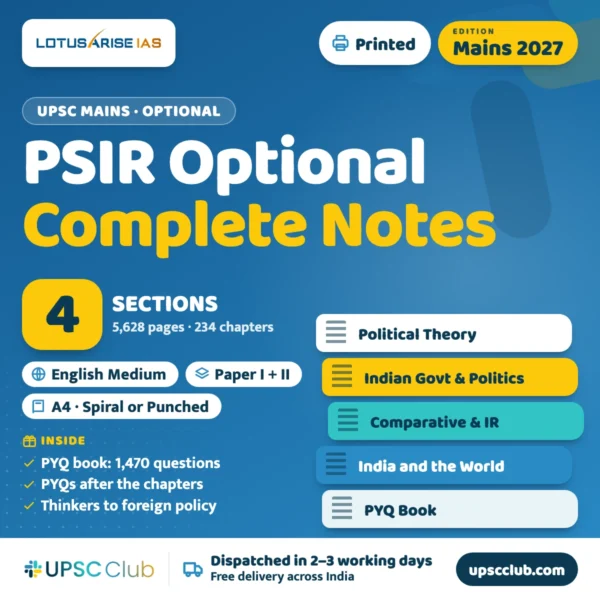
LotusArise PSIR Optional Notes (Printed) Mains 2027 – Paper I & II, 4 Sections
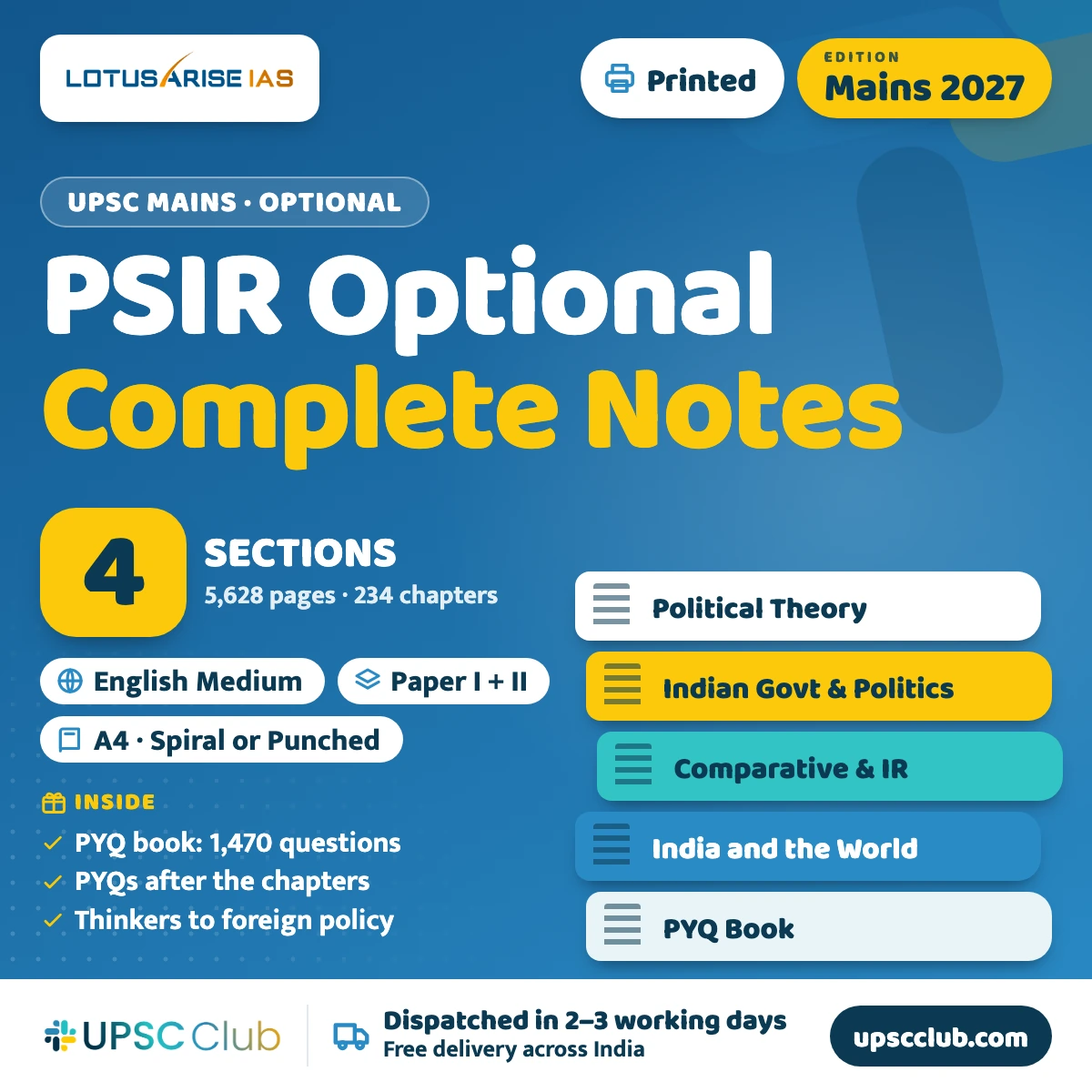
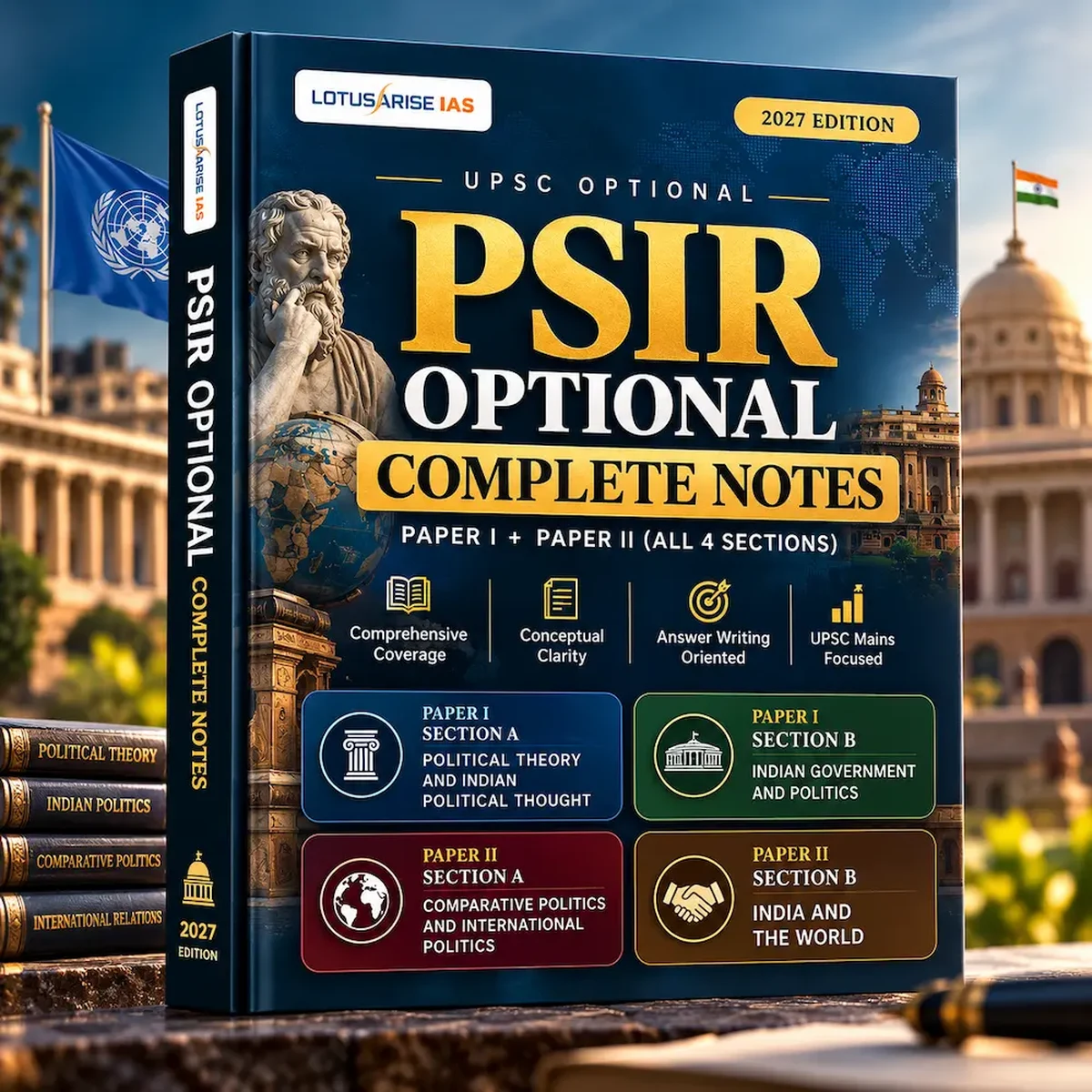
The LotusArise PSIR Optional Notes (Printed) are the complete LotusArise IAS PSIR notes for UPSC Mains, Paper I and Paper II, in four sections that follow the syllabus. Printed by UPSC Club, the printing partner of LotusArise Store, in the binding you choose: spiral-bound or punched only.
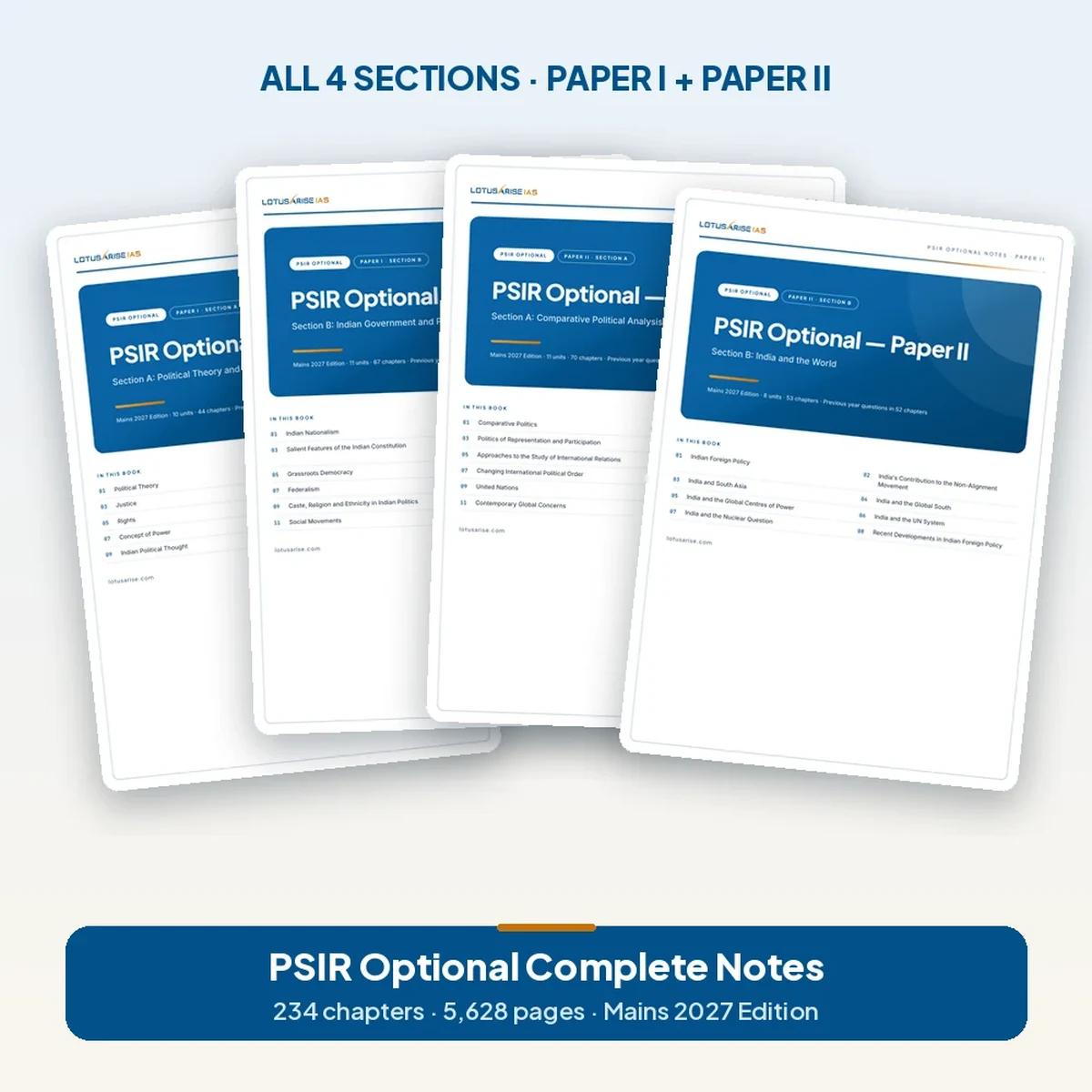
- 4 sections: 5,628 pages and 234 chapters covering both papers
- PYQ book with 1,470 questions (1991–2026), plus PYQs after the chapters
- Thinker by thinker in Paper I; every neighbour and major power in Paper II
- Printed hard copy, A4 · Spiral Bound or Punched Only (no spiral) · English medium · Mains 2027 edition
- Dispatched in 2–3 working days, free delivery across India
- Dispatched in 24–48 hrsPacked and handed to the courier (not on Sundays or holidays)
- Arrives in about 2–8 working daysMost of India, with tracking by SMS and email
- Free delivery on this itemFree delivery above ₹999Orders of ₹999 or more ship free₹70 courier charge below that
Secure payment by UPI, cards, net banking or wallets
Questions about these notes?Chat on WhatsApp · +91 98383 85670- Printed booklets
- Courier across India
- Secure Payments
Everything in this set
The key details, one card at a time
Overview
The LotusArise PSIR notes cover the whole UPSC Political Science and International Relations optional syllabus, Paper I and Paper II, in one voice and in syllabus order. LotusArise IAS wrote them for Mains 2027 as one body of work, so the thinker you meet in Paper I is the one Paper II assumes, and you always know where a topic lives.
This is the printed edition. UPSC Club prints and ships it as the printing partner of LotusArise Store, from the same files LotusArise IAS sells as PDFs on LotusArise Store. You get the four sections and the PSIR PYQ book as A4 printed books, ready to read, mark up and revise.
What's inside
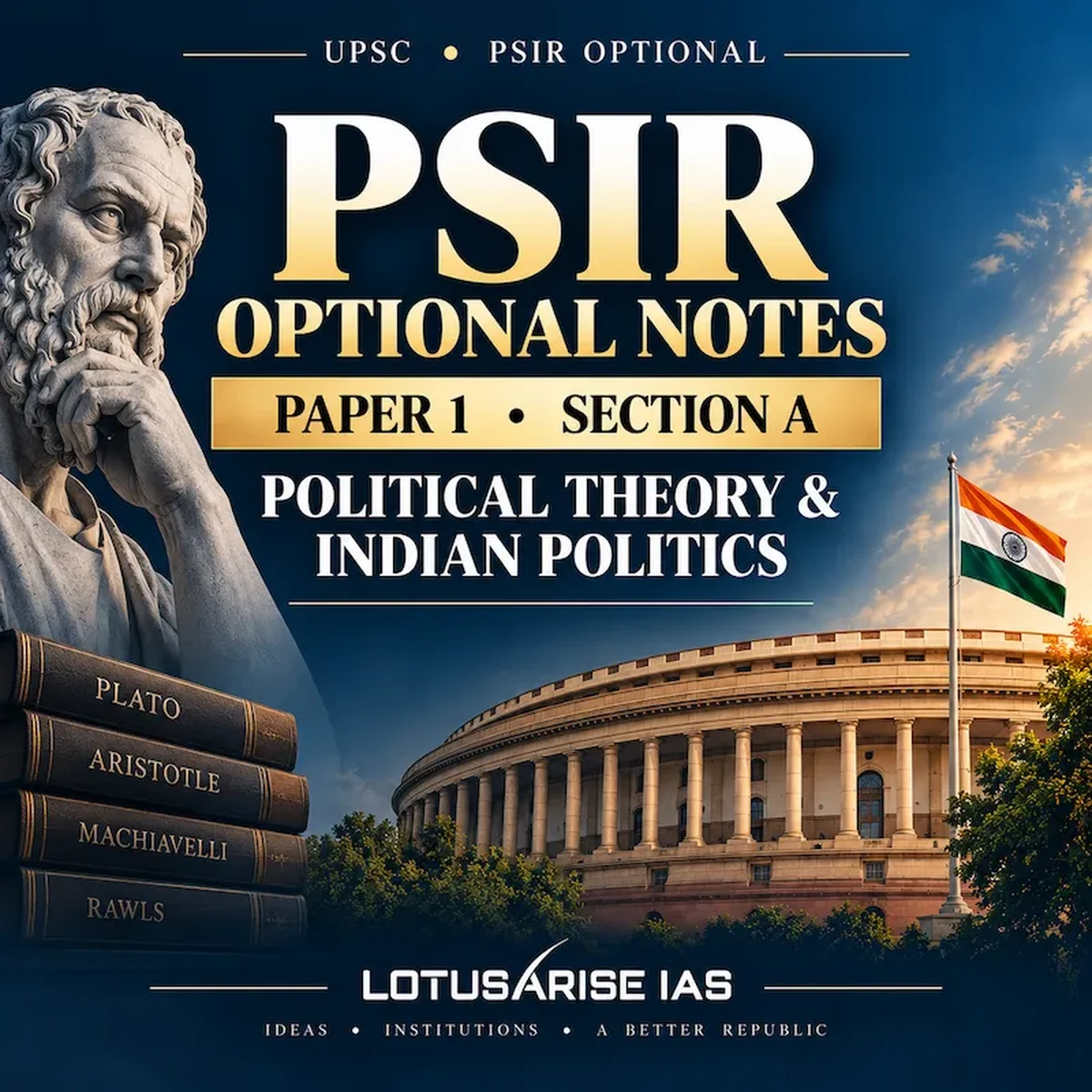
Section 1 · Paper I, Section A: Political Theory and Indian Political Thought (1,062 pages)
Political theory and its approaches; theories of the state, from liberal and Marxist to pluralist, post-colonial and feminist; justice with Rawls and his communitarian critics; equality, rights, democracy and power; liberalism, socialism, Marxism, fascism, Gandhism and feminism; Indian thought from the Dharmashastra and Arthashastra to Aurobindo, Gandhi, Ambedkar and M.N. Roy; Western thought from Plato and Aristotle to Gramsci and Arendt.
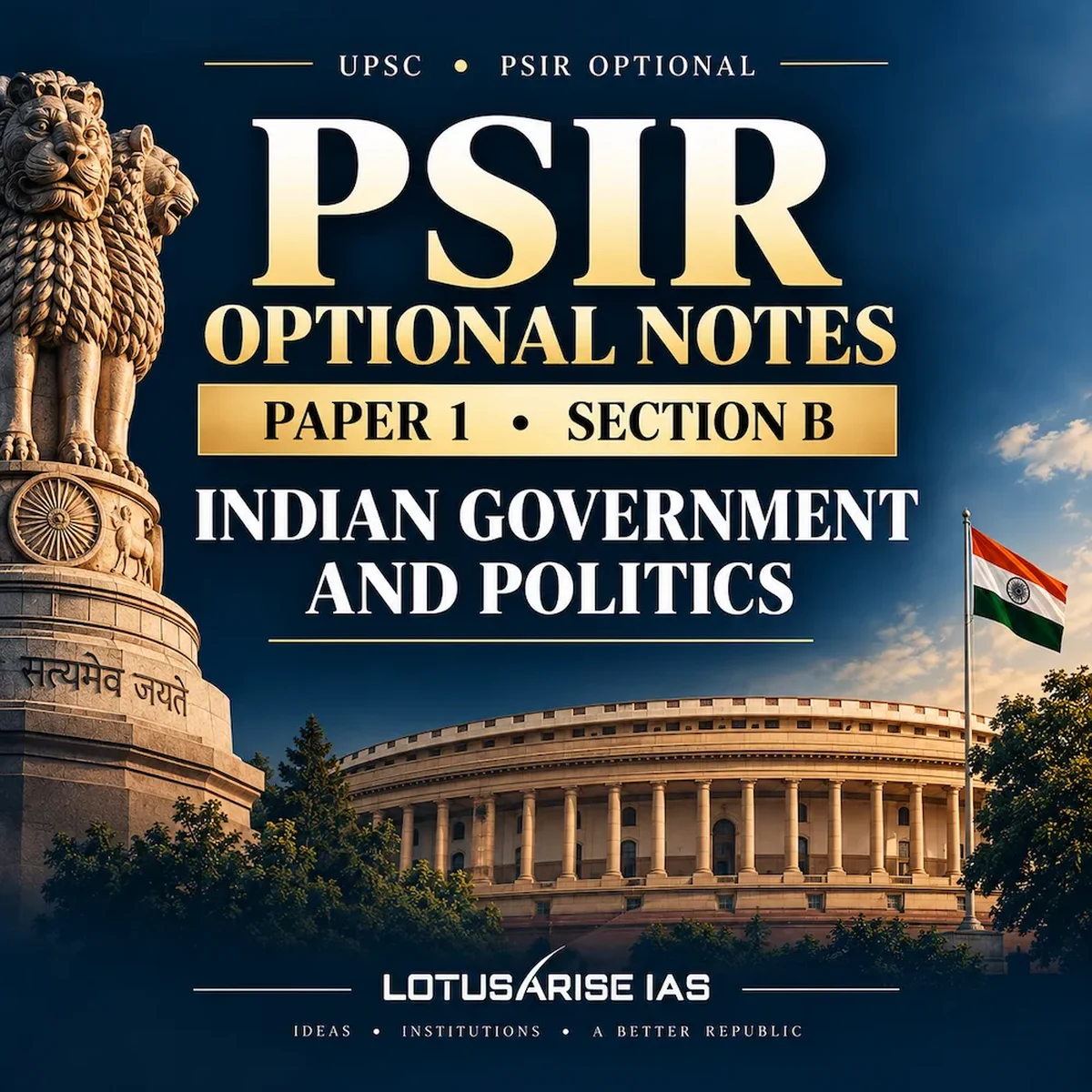
Section 2 · Paper I, Section B: Indian Government and Politics (1,632 pages)
Indian nationalism and the making of the Constitution; the Preamble, rights and duties, Directive Principles, amendment, judicial review and the Basic Structure; Union and State executive, legislature and judiciary; Panchayati Raj and municipal government; statutory commissions; federalism; planning and economic development; caste, religion and ethnicity; the party system and social movements.
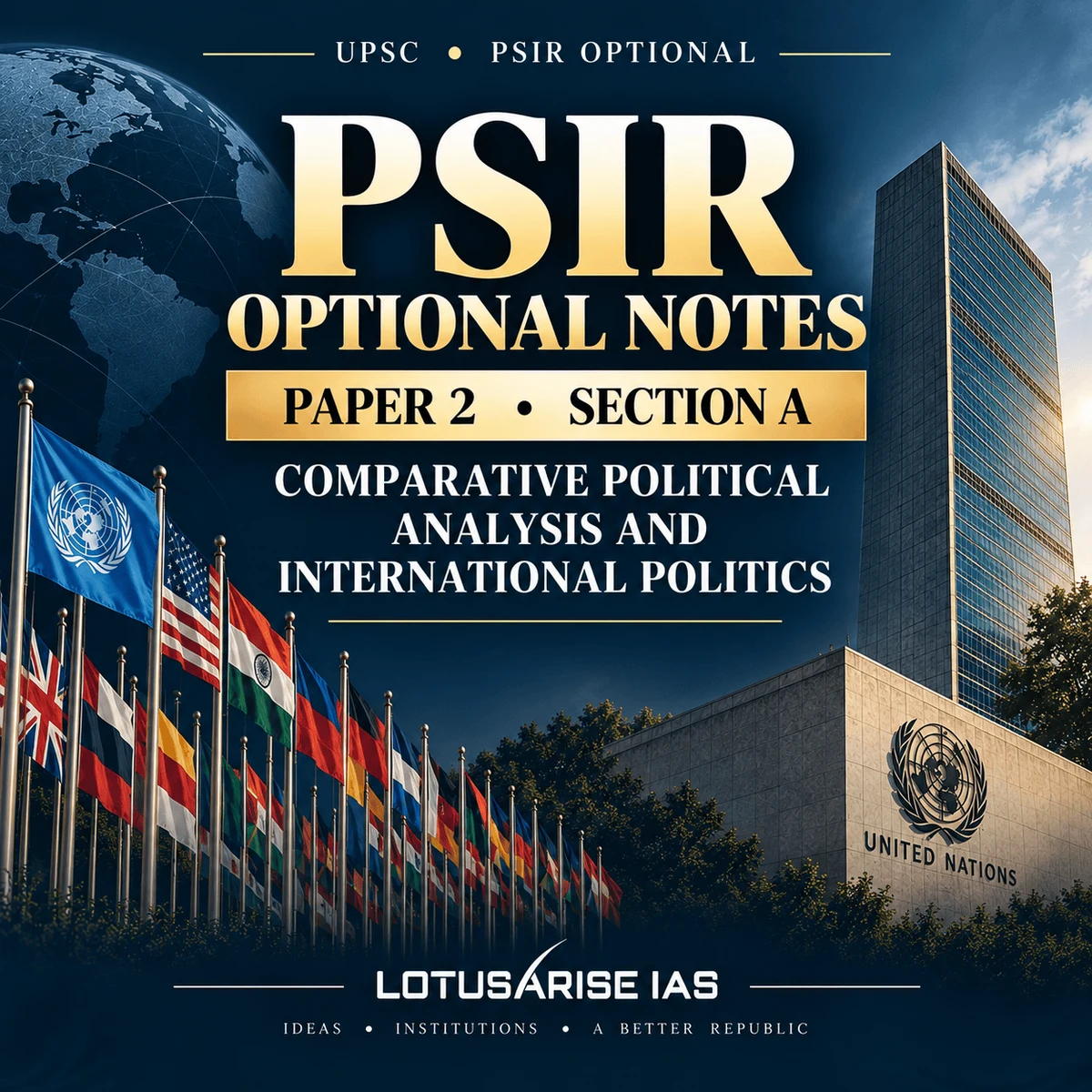
Section 3 · Paper II, Section A: Comparative Politics and International Politics (1,657 pages)
Approaches to comparative politics; the state in capitalist, socialist and developing societies; parties, pressure groups and social movements; globalisation; Idealist, Realist, Marxist, Functionalist and Systems approaches to IR; the Cold War, NAM and the rise of China; Bretton Woods to the WTO; the UN and its reform; the EU, ASEAN and SAARC; global concerns from human rights and environment to terrorism and proliferation.
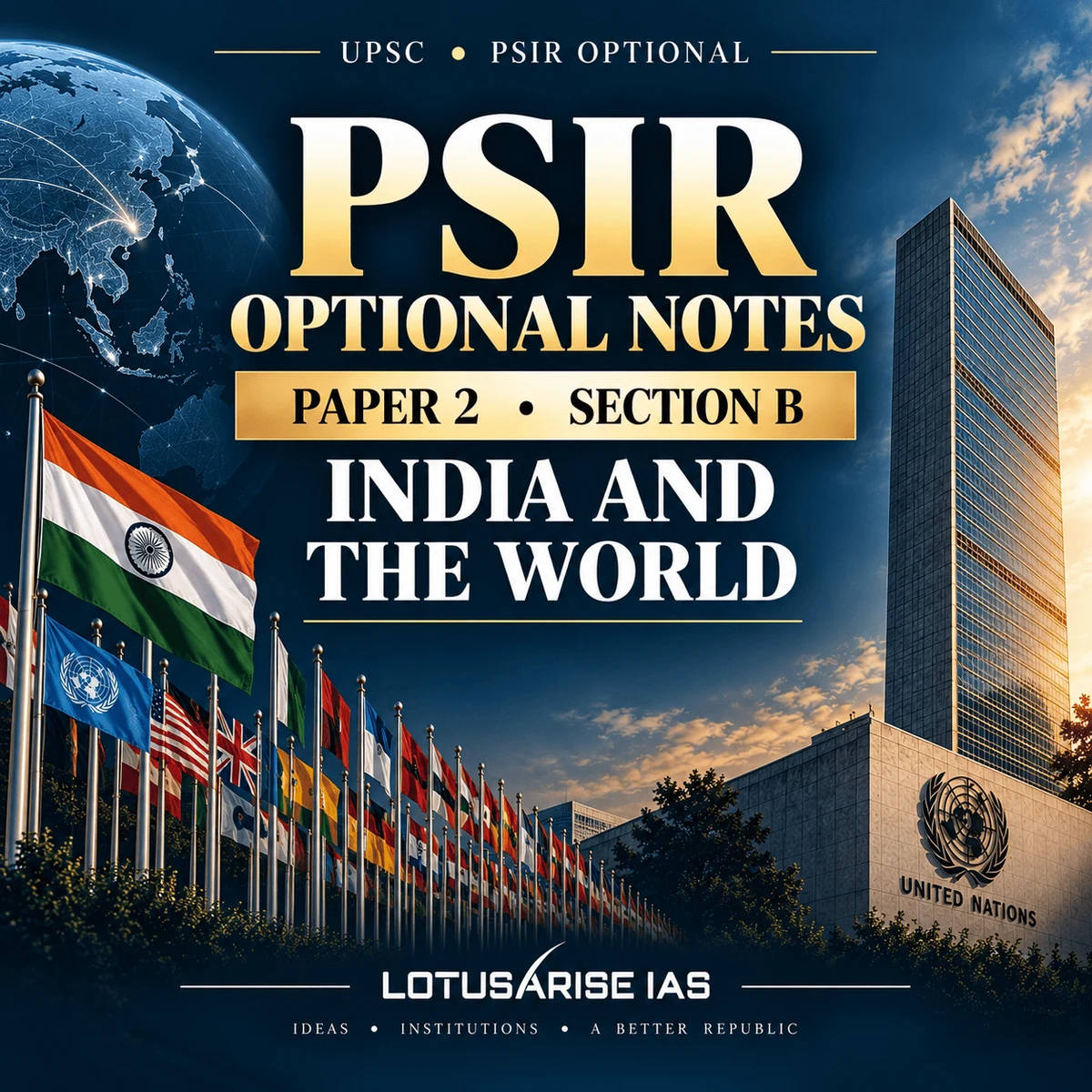
Section 4 · Paper II, Section B: India and the World (1,277 pages)
Determinants and institutions of Indian foreign policy; non-alignment to multi-alignment; South Asia, SAARC, Act East and a chapter on each neighbour; the Global South; the USA, China, Russia, the EU and Japan; the Quad and the Indo-Pacific; India and the UN, the nuclear question, West Asia, Afghanistan and Central Asia.
PSIR PYQ book (194 pages)
1,470 previous year questions from 1991 to 2026, topic-wise and year-wise. On top of this, 232 of the 234 chapters end with their own previous year questions, year marked.
Syllabus covered
| UPSC syllabus | Printed book |
|---|---|
| Paper I, Section A: political theory and Indian political thought | Section 1 |
| Paper I, Section B: Indian government and politics | Section 2 |
| Paper II, Section A: comparative political analysis and international politics | Section 3 |
| Paper II, Section B: India and the world | Section 4 |
| Both papers: previous year questions, 1991–2026 | PYQ book |
How to use these notes
- Build thinker sheets from Section 1.Plato to Arendt and Kautilya to Ambedkar are written for comparison answers; list two quotes and one critique for each.
- Link Section 2 to the news.Mark Basic Structure, federalism and Panchayati Raj chapters with recent judgments and commission reports.
- Read Sections 3 and 4 together.An IR theory from Section 3 explains a foreign-policy choice in Section 4; use both in every Paper II answer.
- Practise from the chapter PYQs.Finish a chapter, then answer one of its printed questions; keep the chapter open beside your answer sheet.
Format, medium and delivery
- Formatprinted hard copy (no PDF), A4, double-sided
- Binding, your choiceSpiral Bound, 15 books of up to about 500 pages each that open flat, or Punched Only, the same pages hole-punched without a spiral, to keep in your own file or ring binder
- Pages5,822 printed pages: 5,628 pages of notes and the 194-page PYQ book
- MediumEnglish
- EditionMains 2027
- Deliverydispatched in 2–3 working days by courier and delivered in 3–7 days across India; free delivery on orders of ₹999 or more
See the pages before you order. LotusArise shares free sample PDFs of all four sections in one folder: PSIR free samples (Google Drive).
Frequently asked questions
Is this the same as the LotusArise PSIR notes PDF?
Yes. The printed set is made from the same Mains 2027 files that LotusArise Store sells as PDFs: all four sections and the PYQ book. Only the format is different.
Is it a PDF or a printed copy?
A printed copy only. No PDF download comes with this order. If you want the PDF edition, buy it directly from LotusArise Store.
What is the difference between Spiral Bound and Punched Only?
Both have the same printed pages. Spiral Bound comes as 15 spiral-bound books of up to about 500 pages each, which open flat on the desk. Punched Only comes hole-punched without a spiral, so you can keep the sheets in your own file or ring binder and take out one chapter at a time. Pick the binding before you add the set to the cart; Punched Only costs less.
Are these notes enough for PSIR optional?
They cover all four sections of both papers with previous year questions after the chapters, so they can be your main notes. For Paper II, keep adding current events and practise answer writing every week.
Can I prepare PSIR optional without coaching using these notes?
Yes. They are written for self-study and follow the syllabus line by line; add a test series for answer evaluation.
Are the notes available in Hindi?
No. LotusArise IAS writes these notes in English only, so the printed set is English medium.
How long does delivery take?
The set is dispatched in 2–3 working days. Courier delivery then takes 3–7 days, depending on your city.
Related
Browse all UPSC optional notes, or see the Shubhra Ranjan PSIR printed notes.
Specifications
| Weight | 14.39 kg |
|---|---|
| Binding | Spiral Bound, Punched Only (No Spiral) |
You must be logged in to post a review.
Related products
-
 Optional · Printed
Vajiram and Ravi Sociology Optional Notes – 6 Printed Booklets (English Medium)
₹1,449 -
 Optional · Printed
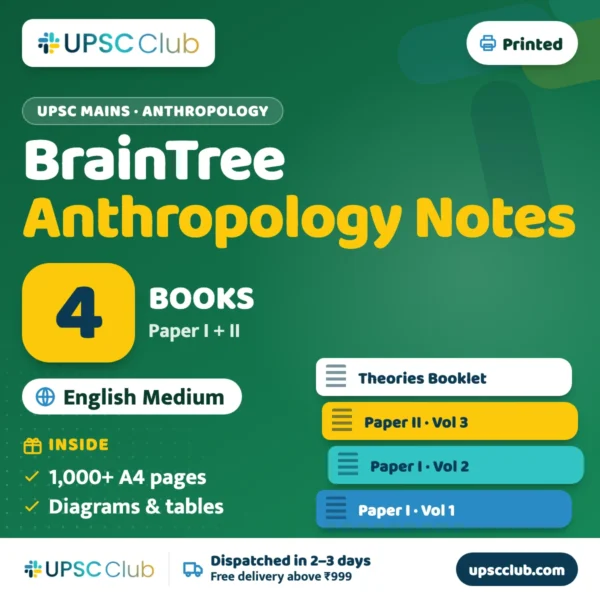
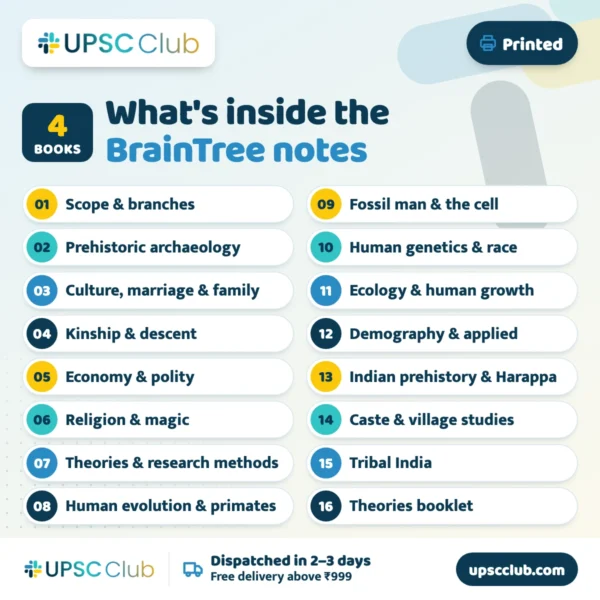
BrainTree Anthropology Optional Printed Notes by G.S. Karthik – 4 Books, Paper I & II
20+ bought ₹1,299 -
 Optional · Printed
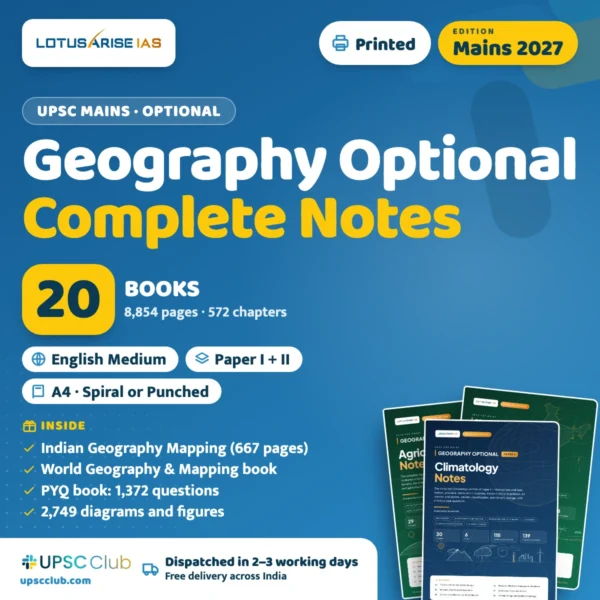
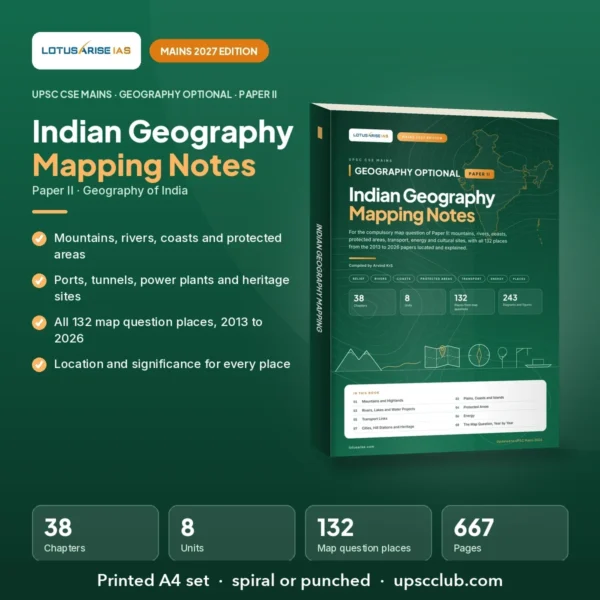
LotusArise Geography Optional Notes (Printed) Mains 2027 – Paper I & II, 20 Books
from ₹9,299View This product has multiple variants. The options may be chosen on the product page
Reviews
There are no reviews yet.